The Vote
My mother stood at the end of the dining room table with a folded sheet of paper in her hand, as if she were about to announce the winning raffle ticket.
Outside, snow had turned the street silver. Inside, my father’s old brass clock ticked above the fireplace, and someone’s cinnamon candles were burning down to the glass.
Martha had waited until everyone finished dessert.
That was the part I remember most clearly.
She could have said what she wanted in the kitchen, in the hallway, over a phone call. Instead, she had gathered nearly twenty relatives into my parents’ living room on Christmas Day and arranged the moment like a ceremony.
My husband, Marcus, sat beside me on the sofa.
He wore the navy sweater I had given him for our anniversary and kept his hands loosely folded between his knees. He had always been quieter around my family than he was at home, partly because he never enjoyed fighting for space in loud conversations.
My sister Beatrice sat across from us.
Dad, Arthur, leaned back in his chair with his arms crossed.
Mom looked at all of us.
“I think we all know,” she said, “that this has gone on long enough.”
A few people shifted in their seats.
I felt Marcus glance toward me.
Mom unfolded the paper.
“Starting today, Marcus and Eleanor will no longer be invited to family gatherings.”
My aunt lowered her coffee cup.
“What?”
Mom held up a hand.
“This is not meant to be cruel. It is simply necessary.”
She looked directly at Marcus.
“You have never understood the kind of family you married into.”
Marcus blinked once.
Dad gave a small, humorless laugh.
Mom continued.
“You are a decent man, perhaps. But you are not a fit for this family. Your background, your choices, your… modest ambitions—”
She paused over the last two words.
“—are simply beneath what our family has built.”
The room went quiet.
I looked at my father.
For eight years, Arthur had greeted Marcus with the same expression he might give a waiter who had brought the wrong wine. He never insulted him loudly. My father preferred remarks that could be defended as jokes.
Still taking the train?
That little apartment you two have must feel cozy.
Some men are happy staying where they are.
Marcus had never answered back.
Not once.
Mom placed the paper on the table.
“We will vote,” she said. “And I expect everyone to be honest.”
She passed around blank slips of paper.
My cousin stared at his.
My uncle looked at the floor.
Beatrice did not look at Marcus.
I should have been furious.
Instead, I felt strangely calm.
For years, I had tried to explain my family to Marcus. I had apologized for comments. Redirected conversations. Changed subjects. Suggested shorter visits.
He had always told me the same thing.
“They’re showing us who they are. We don’t have to convince them otherwise.”
Now, sitting in that room with a Christmas tree glowing behind my mother’s shoulder, I finally understood what he meant.
The papers were collected.
Mom counted them.
“All in favor,” she said.
Hands stayed down.
But one by one, voices followed.
“Yes.”
“Yes.”
“I suppose so.”
Dad didn’t bother lowering his voice.
“Absolutely.”
Mom nodded.
“Unanimous.”
Marcus stood.
I stood with him.
He looked at my mother.
Then my father.
Then Beatrice.
He said nothing.
Neither did I.
We put on our coats.
As we walked toward the front door, I heard Mom say, “Eleanor, don’t make this dramatic.”
I stopped with my hand on the doorknob.
For one second, I thought about turning around.
Instead, I opened the door.
Cold air rushed into the hallway.
Marcus held the door for me.
We stepped outside together.
Behind us, the clock kept ticking.

The Man They Thought They Knew
We drove home in silence.
For several miles, neither of us turned on the radio.
Finally, Marcus said, “You okay?”
I laughed once, though there was nothing funny about it.
“I don’t know.”
He nodded.
After a moment, I asked, “Were you surprised?”
“No.”
I turned toward him.
“No?”
He kept his eyes on the road.
“Not really.”
“You knew my mother was going to do that?”
“I knew she wanted to.”
The windshield wipers moved steadily across the glass.
I stared at the houses passing by.
“You could have said something.”
“I could have.”
“Why didn’t you?”
He was quiet.
“Because I didn’t want to make your family believe I was defending myself because I thought I was better than them.”
I looked at him.
There it was again.
That strange steadiness I had never quite understood.
Marcus had not been unsuccessful.
He simply had never needed my family to know what he did.
His work was complicated and private. For years, he had been part of a development company that designed mixed-use properties, negotiated acquisitions, and rebuilt aging commercial spaces. His title officially said partner. In practice, he had become one of the firm’s most influential people.
I knew this.
But I also knew he deliberately avoided talking about money.
My father didn’t.
Arthur owned a furniture store in a strip mall ten minutes from my parents’ house. He loved the business, or at least the idea of it. He loved telling stories about the years when three generations of customers came in every Saturday.
Lately, though, the stories had become shorter.
Sales were down.
The building needed repairs.
Suppliers wanted faster payment.
Marcus knew some of that because he had helped me quietly cover a few of my father’s urgent bills over the years.
My father never knew.
“He thinks you don’t have much,” I said.
Marcus smiled faintly.
“That’s okay.”
“No, it isn’t.”
He reached across the console and squeezed my hand.
“It doesn’t have to matter.”
Three days after Christmas, it mattered.
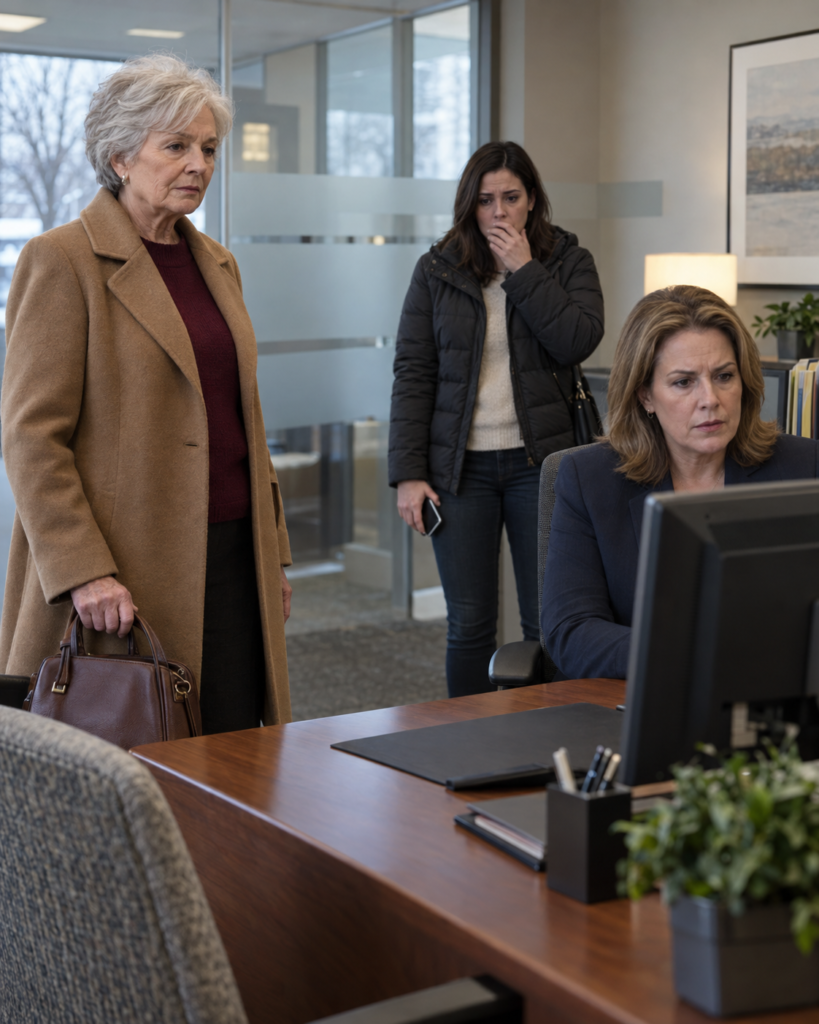
A large commercial property firm had acquired the strip mall where my father’s store had operated for nearly twenty years.
The announcement was public.
The new owners planned to renovate the entire property.
My father complained about it over the phone.
“Rich people buying up everything,” he said. “They’ll turn it into apartments and boutique nonsense.”
I said nothing.
On the fourth day, Marcus received an email from his assistant.
The acquisition had closed.
On the fifth day, my father found out who had signed the final documents.
The Letter
I was making coffee when my phone rang.
Beatrice.
I almost let it go to voicemail.
Instead, I answered.
“Eleanor?”
Her voice sounded different.
“What’s wrong?”
“Have you talked to Marcus?”
“Not this morning.”
“Tell him to call Dad.”
I looked across the kitchen.
Marcus was standing at the counter reading something on his tablet.
“Why?”
There was silence.
Then Beatrice said, “The store.”
My stomach tightened.
“What about it?”
“Dad got a letter.”
Marcus looked up.
He must have heard my tone.
“What kind of letter?”
Beatrice lowered her voice.
“They’re not renewing his lease.”
I stared at Marcus.
He set down the tablet.
“Who sent it?”
Beatrice swallowed.
“The development company.”
I didn’t say anything.
She did.
Then she whispered, “Marcus signed it.”
There was a long silence.
“He didn’t do it because of Christmas, did he?”
I looked at my husband.
Marcus shook his head before I could ask.
“No.”
Beatrice seemed relieved.
Then frightened.
“Dad says he wants to talk to him.”
“Does he?”
“He says he needs to.”
I closed my eyes.
For eight years, my father had treated Marcus like a man who had married into the family by mistake.
Now, suddenly, he needed something from him.
The letter itself was routine. The company was renovating the property, and the existing lease would end in several months. My father’s store would need to relocate.
There was no threat.
No punishment.
No mention of Christmas.
Just a signature at the bottom.
Marcus Hale
Managing Partner
That afternoon, my mother called.
Then again.
Then Beatrice called from outside my father’s store.
“He’s sitting in his office,” she said. “He hasn’t moved.”
“What does he want me to do?”
“Please come over.”
I looked at Marcus.
“We don’t have to.”
He leaned back in his chair.
“Your father is scared.”
“That’s not our responsibility.”
“No,” he said. “But he’s still your father.”
I stared at him.
“You’re not going to fix this for him.”
“No.”
“Then what are you going to do?”
Marcus was quiet for a moment.
“I’m going to give him enough time to figure out what to do next.”
The answer was so simple that it made me angry.
Not at him.
At myself.
At how badly I wanted justice to feel louder.
What My Father Finally Understood
We met my father at the store the next morning.
The place smelled like old wood, fabric samples, and the coffee Arthur had been reheating since sunrise.
He looked smaller than I remembered.
There were boxes stacked beside the front counter.
My father avoided my eyes.
“Eleanor,” he said.
“Dad.”
Then he looked at Marcus.
“Marcus.”
Marcus nodded.
“Arthur.”
Dad gestured toward the office.
“Can we talk?”
We followed him inside.
He shut the door.
For several seconds, nobody spoke.
Finally, my father sat behind his desk.
“I didn’t know.”
Marcus said nothing.
“I didn’t know it was you.”
“I know.”
Dad’s jaw tightened.
“I thought you were an architect.”
“I am.”
“I mean, I thought you worked for somebody.”
“I do.”
My father rubbed both hands over his face.
“Apparently, I didn’t understand very much.”
Marcus remained standing.
I could see the anger in my father now, but it wasn’t directed outward. It had turned inward, into embarrassment.
“I said some things,” Dad muttered.
“Yes,” I said.
He looked at me.
“I was wrong.”
The words sounded awkward in his mouth, as if he had never practiced them.
“I was wrong about you, Marcus.”
Marcus nodded once.
My father stared at him.
“Are you the one who decides what happens to this property?”
“Not alone.”
“Could you stop the lease from ending?”
Marcus glanced toward me.
Then back at my father.
“I could change the transition terms.”
My father leaned forward.
“Why would you?”
That was the first honest question he had asked all morning.
Marcus answered plainly.
“Because I’ve never wanted your business to fail.”
My father looked down at his desk.
I watched his hand move toward a stack of unpaid invoices.
He stopped halfway.
“And Christmas?” he asked.
Marcus understood.
“You made a family decision,” he said. “I won’t pretend it didn’t hurt. But the lease decision isn’t about that.”
My father gave a bitter little laugh.
“You’re better than me.”
Marcus shook his head.
“No.”
Dad looked up.
“You don’t get to make yourself better by humiliating me either.”
Marcus’s expression softened.
“You’re right.”
That answer seemed to break something open.
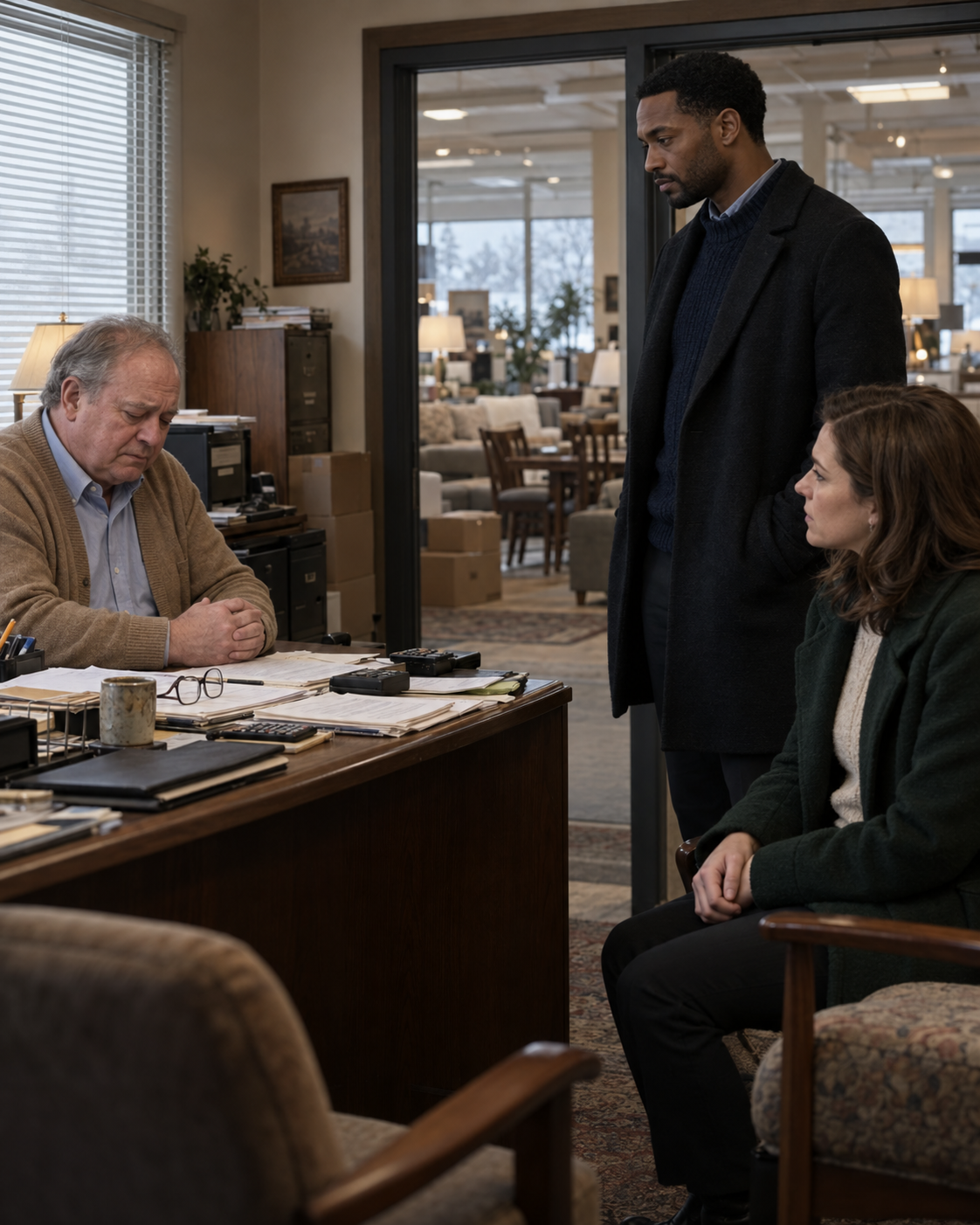
Marcus agreed to extend the transition period.
Not indefinitely.
Not for free.
He gave my father several additional months to move the business, negotiate with another location, and organize his finances.
The company would even allow the existing fixtures to remain temporarily, saving Arthur thousands of dollars.
My father listened without interrupting.
When Marcus finished, Dad whispered, “Why?”
Marcus put his hands into his coat pockets.
“Because needing help doesn’t make you worthless.”
My father looked at the floor.
Neither of us spoke.
After a while, he said, “I don’t deserve that.”
Marcus answered, “Probably not.”
I almost laughed.
Dad did too.
It was the first real laugh I’d heard from either of them.
The Family We Kept
My mother never apologized.
Not directly.
She sent a Christmas card the following year with everyone’s names printed neatly inside. Marcus and I weren’t mentioned.
Beatrice changed.
Not overnight.
She began texting me separately instead of only in family group chats. She asked about Marcus. She invited us to dinner once, just the four of us.
The dinner was uncomfortable.
But it was honest.
My father came too.
He talked about the new store location.
Smaller.
Cheaper.
Better for him, he admitted.
He had sold some of the older inventory and finally started using online sales, something he’d resisted for years.
“I guess I needed a fire lit under me,” he said.
Marcus smiled.
“Sometimes change charges rent.”
Dad laughed.
My mother didn’t.
She sat at the end of the table and carefully cut her chicken into smaller pieces.
No one mentioned the vote.
No one formally reversed it.
Maybe because there was no ceremony capable of undoing one.
Months later, my father invited us to the opening of his new store.
It wasn’t grand.
There were twelve display pieces, a handwritten specials board, and a crooked ribbon tied across the entrance.
Arthur stood beside the door while Marcus looked over the showroom.
“You like it?” Dad asked.
Marcus nodded.
“Yeah.”
Dad hesitated.
“You ever need furniture for one of your buildings…”
He stopped.
Marcus smiled.
“We’ll talk.”
Dad smiled back.
There was no hug.
That would have been too much.
Instead, my father reached out and straightened the collar of Marcus’s jacket, an old-fashioned gesture that lasted barely a second.
Then he turned toward the door.
My mother was standing outside.
She waved once.
I waved back.
We still see them sometimes.
We don’t go to every gathering.
We don’t stay when someone starts measuring a person’s worth by what they own, where they live, or what title sits beneath their name.
Those boundaries don’t require a family vote.
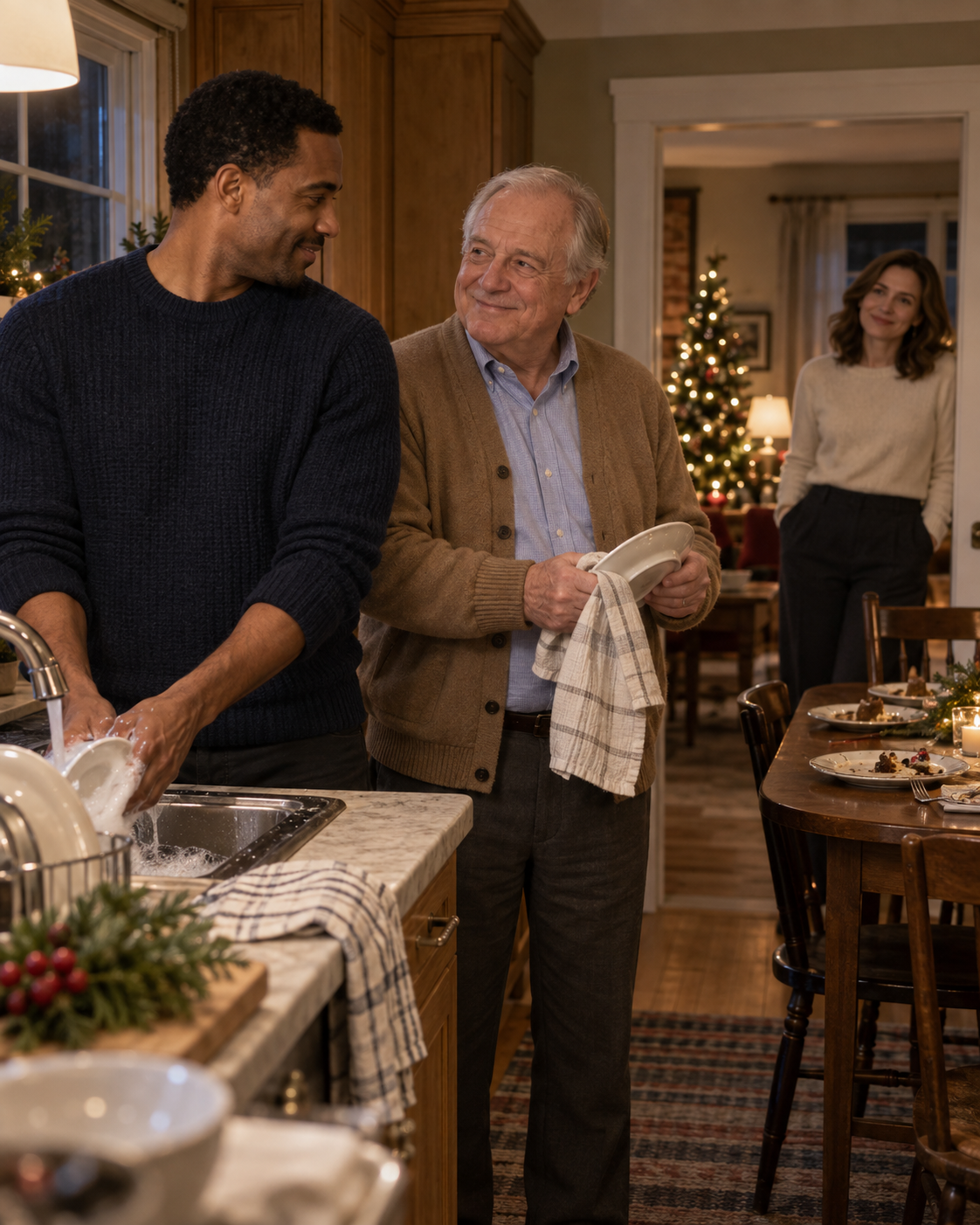
Last Christmas, Marcus and I hosted dinner at our house.
There were eight people.
A smaller table.
No speeches.
No ballots.
After dessert, my father stood in the kitchen washing dishes beside Marcus.
I watched them through the doorway.
Dad handed him a plate.
Marcus took it.
Their shoulders almost touched.
For years, my father had mistaken quietness for weakness.
He had mistaken modesty for lack of ambition.
He had mistaken not being impressed by money for not having any.
But none of that was what finally changed him.
What changed him was the moment Marcus could have used his power to make my father feel small—and chose not to.
I looked at the two of them beneath the warm kitchen light, passing clean plates back and forth without saying much.
For once, nobody was keeping score.