The Envelope in the Mailbox
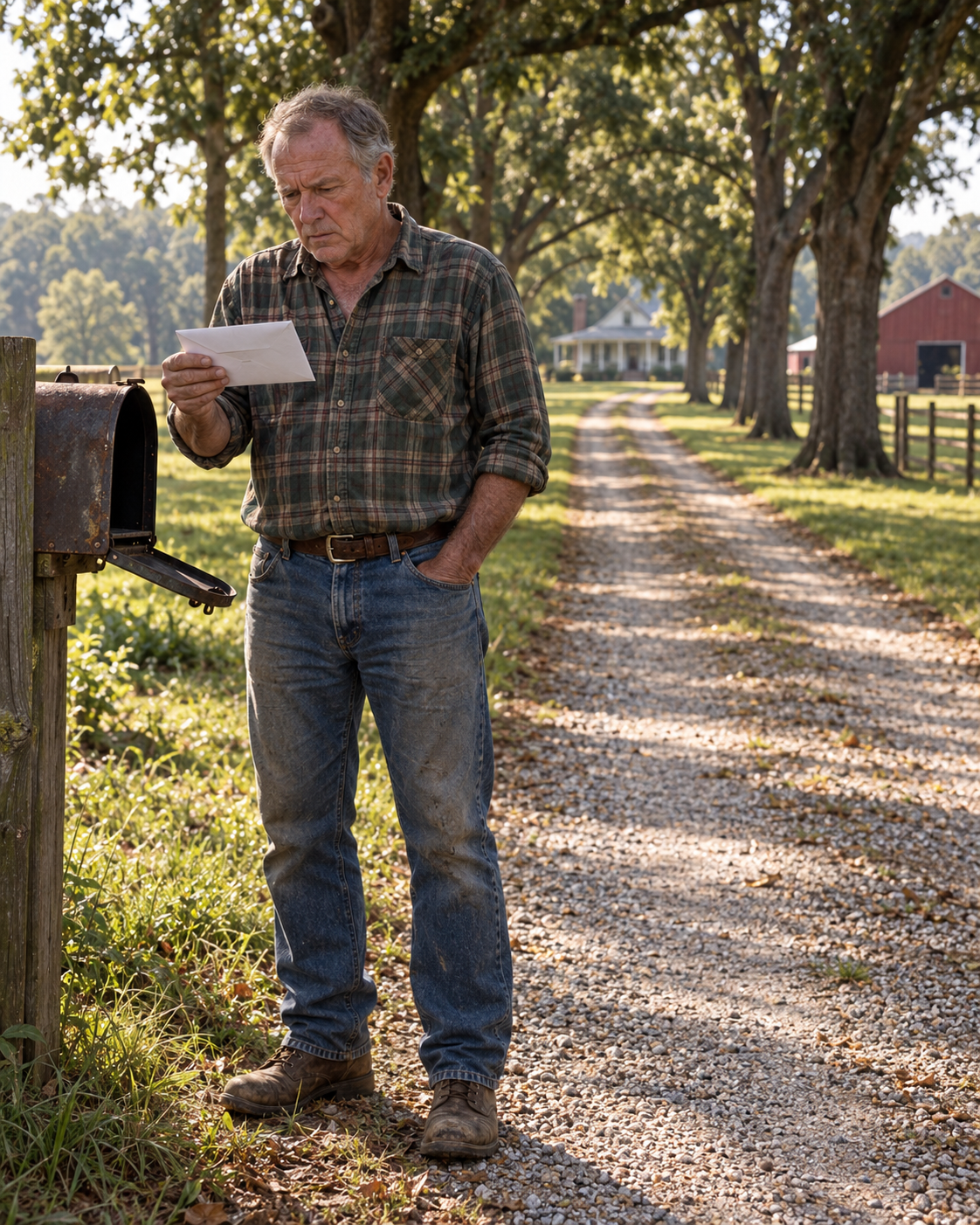
At sixty-three, Walter Boon still walked the quarter-mile to his mailbox every morning.
He did it before breakfast, before the horses started fussing for feed, before the Georgia heat turned the gravel driveway soft enough to hold a boot print. It was one of the few routines left that had survived his wife Carol’s death.
That Tuesday in late July, he opened the mailbox expecting a seed catalog and an electric bill.
Instead, he found a letter from the Mil Haven County Register of Deeds.
Walter read the first paragraph standing beneath the pecan trees.
Then he read it again.
A $91,000 home equity line of credit had been placed against his property.
The first payment was already thirty days late.
He stared at the page until the words blurred, though the morning was perfectly clear.
The farm had belonged to his father before him. Eleven acres outside Mil Haven, forty minutes from Savannah, with an old farmhouse, a red barn, three horses, and enough memories packed into its walls that Walter sometimes felt he was living inside a photograph.
He had never taken out the loan.
He called his son.
Dean answered on the fifth ring.
“Dad, hey. I’m about to walk into a client call.”
“There’s a loan against the farm.”
A pause.
Not long.
Just long enough.
“Okay,” Dean said. “First, don’t panic. It’s probably the refinance paperwork.”
“What refinance paperwork?”
“The stuff we did in April. The medical bills. Remember?”
Walter remembered signing something.
Dean had brought over a thick folder after Carol’s final hospital expenses had drained more of Walter’s savings than he wanted to admit. Dean had promised to simplify everything.
Walter had signed where he was told.
He had trusted his son.
That was the part that made his stomach tighten.
“Bring me my copy,” Walter said.
“I will.”
“Today.”
Dean hesitated.
“Dad, I said I’ll handle it.”
The call ended.
Walter stood beneath the pecan trees with the notice in his hand.
He had spent thirty-one years as a claims investigator and senior fraud examiner for a major insurance company. Before that, he had served six years as a military policeman. He had interviewed people who could lie without blinking. He knew how stories changed when someone was hiding something.
Most important, he knew what hesitation sounded like.
By that evening, Dean and his wife, Sherry, were sitting across from him at the kitchen table.
Sherry arrived wearing white jeans and a blouse that probably cost more than Walter’s first pickup truck.
Walter placed the county notice between them.
“Explain it.”
Dean glanced at the paper.
Sherry glanced at Dean.
“It’s a paperwork mix-up,” Dean said.
“The payment is thirty days late.”
“It’ll be fixed.”
“Show me my copy.”
Dean rubbed his jaw.
“I have it at the office.”
“That’s not what I asked.”
Sherry reached across the table and touched Walter’s forearm.
“Walter, honey, we’re actually worried about you.”
He looked at her.
“Why?”
“You’ve been forgetting things.”
“Such as?”
She smiled sadly.
“You left the tractor running in the barn last week.”
Walter knew exactly where the tractor had been.
He hadn’t started it in eleven days.
He could have told them that.
Instead, he looked down at the notice.
And waited.
The same way he used to wait across an interview table when a suspect had just told the first lie.
“Maybe you’re right,” he said quietly.
Dean exhaled.
Sherry’s shoulders loosened.
Something changed in the room.
Walter saw it.
They thought he was slipping.
That was the moment he decided to let them keep thinking it.
The Bottle on the Counter
The next morning, Sherry arrived before Walter had finished his coffee.
She carried a white pharmacy bag.
“Dr. Whitfield called this in for you,” she said, placing an amber bottle on the kitchen counter.
Walter looked at the label.
“Who’s Dr. Whitfield?”
Sherry blinked.
“The doctor Dean told you about.”
“I don’t know a Dr. Whitfield.”
She laughed softly.
“You’ve been stressed. Maybe that’s why.”
Walter’s regular physician was Dr. Okafor, whom he had seen for fifteen years.
Sherry knew that.
Walter turned the bottle over in his hand.
He felt something cold move through him.
His instincts told him not to take it.
But another voice, quieter and more dangerous, said, It’s your son.
So he swallowed the pill.
The first few days were easy to dismiss.
He was tired.
Then he was exhausted.
He started sleeping until nine in the morning.
His hands trembled.
He dropped a coffee mug.
Then his barn keys.
One afternoon, he sat in Carol’s old recliner and stared at the needlepoint above the fireplace for nearly four hours before realizing he had forgotten what he intended to do.
That frightened him.
The fear was exactly what Sherry wanted.
She texted him every morning.
Take your medicine.
Walter obeyed.
But he also watched.
When she came into the kitchen, he noticed where she stood.
When Dean visited, he noticed which questions he asked.
When the subject of the farm came up, Dean stopped using words like “Dad” and started using phrases like “your care” and “what’s best.”
On the tenth day, Walter forced himself to his computer.
His fingers shook as he logged into his bank account.
He saw four cash withdrawals.
$4,800.
$4,700.
$4,600.
$3,900.
Nearly $18,000 gone.
Each withdrawal was just below the amount that would have attracted additional reporting scrutiny.
Scanned signatures appeared beside them.
His signature.
But Walter knew his own handwriting.
These were copies made by someone who had practiced.
He leaned back in his chair.
The fog in his head seemed to part for one clear second.
The loan.
The missing money.
The pills.
The story about the tractor.
The repeated suggestion that he was forgetting things.
They were not separate events.
They were pieces of one plan.
Someone wanted him to look incapable.
And someone wanted everything he owned.
Walter did not call Dean.
He did not confront Sherry.
That night, he took the pill bottle into the barn, emptied the contents into a small metal container, and locked it away.
Then he called Marcus Webb.
Marcus had been one of Walter’s closest colleagues for decades, first as a state fraud investigator and later as a private elder-fraud consultant.
Marcus listened without interruption.
When Walter finished, he said only, “Do you want me to believe you?”
Walter closed his eyes.
“I want you to prove me wrong.”
Marcus was silent.
Then he said, “I don’t think I’m going to.”
Two days later, they met at a diner off Highway 17.
Walter brought the amber bottle.
Marcus brought a legal pad.
Neither man ordered pie.
They spent the next six weeks building a case.
The pills were sent to an independent laboratory.
They came back as risperidone, a powerful antipsychotic medication Walter had never been prescribed.
His medical records confirmed that.
A signature examiner compared the paperwork on the $91,000 loan with the original documents Walter had signed in April.
The signature was his.
The pages around it were not.
Someone had swapped pages into the document package after Walter signed.
The farm loan was not a clerical mistake.
It was fraud.
And the more Marcus uncovered, the uglier the truth became.
Sherry’s real-estate business had collapsed months earlier.
Dean’s consulting income was being propped up with borrowed money.
There were maxed-out credit lines.
Gambling debts.
People calling him about money he didn’t have.
The farm was worth far more than anything else they owned.
They did not need Walter to die.
They needed him to look incompetent.
That distinction terrified Walter more than anything else.
The Farm They Thought Was Already Theirs
Once Walter stopped taking the pills, the fog lifted.
He did not tell Sherry.
He played weaker.
He moved slower.
He let his hand tremble when she was watching.
He even began using a cane he did not need.
Sherry became bolder.
One afternoon she sat on the porch swing and said, “Dean and I think a memory-care facility might be best for you.”
Walter stared across the pasture.
“For how long?”
“Just until things stabilize.”
“And the farm?”
She gave him a reassuring smile.
“We’d handle everything.”
Walter almost laughed.
Instead, he nodded.
“Maybe you’re right.”
That answer changed her whole face.
Relief.
Not sadness.
Relief.
Later that night, Walter called Dean.
His voice sounded weak.
He told him he had been speaking with an estate attorney in Savannah.
“I think I’m going to sign the farm over to a land conservancy,” he said. “Put it in Carol’s name. I don’t trust myself to manage it anymore.”
Silence.
Then Dean said, “Dad, you can’t do that.”
Walter looked at the dark window.
“Why not?”
“You need to wait.”
“For what?”
“Until you’re thinking clearly.”
There it was.
Not concern.
Urgency.
Walter gave them one more piece of bait.
He said he would sign Monday morning.
That night Marcus and Walter finished preparing the evidence.
The next move came sooner than expected.
At 1:47 a.m., Walter’s security camera captured the back door opening.
Dean stepped inside.
Sherry stood outside near the porch, watching the road.
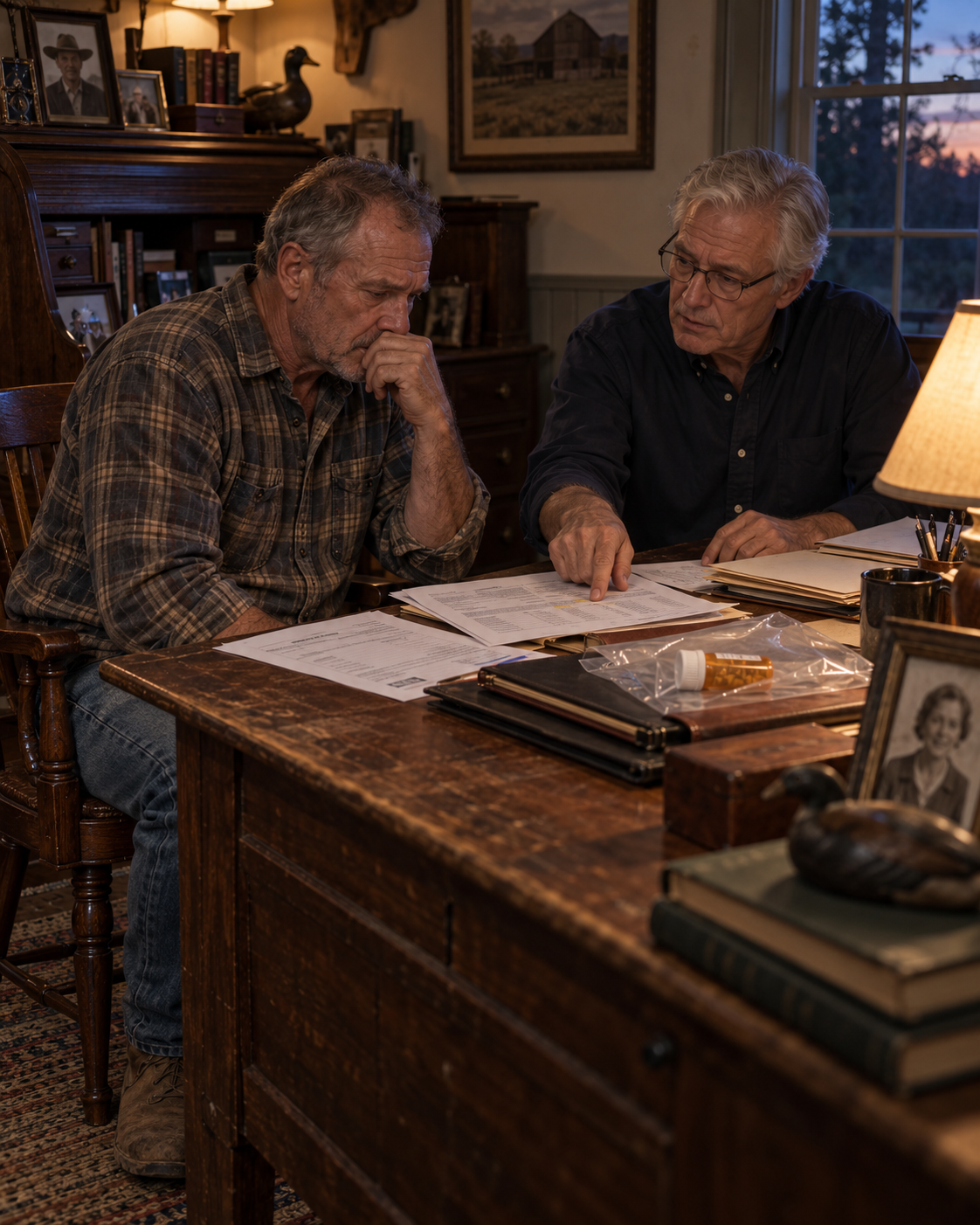
Dean went directly to the study.
He used a key Walter had never known he possessed.
He opened the antique rolltop desk.
Then the lockbox.
Walter watched the footage beside Marcus in silence.
Dean removed a folder labeled with the name of the land conservancy.
Inside was nothing important.
Walter had prepared it specifically for them.
But Dean did not know that.
Sherry’s phone rang outside.
She answered.
Three minutes later, Dean returned from the study.
The camera caught him holding a copy of the supposed transfer documents.
Later, Marcus obtained records showing that Sherry had already contacted the same memory-care facility weeks earlier.
A guardianship petition had been drafted before Walter’s supposed decline had even begun.
That was the piece that finally broke Walter.
He had expected greed.
He had expected desperation.
He had even prepared himself for theft.
But looking at the date on that petition, he understood something worse.
They had decided who he was before they finished destroying the evidence that proved who he really was.
Walter sat at the kitchen table until dawn.
Carol’s reading glasses were still on the nightstand in the bedroom.
He had never been able to move them.
For the first time since her death, Walter wished she were there badly enough that it hurt to breathe.
He whispered, “I’m sorry, Carol.”
Then he straightened the papers in front of him.
“Not this time.”
The Courthouse
The hearing took place in October.
Walter wore the same old flannel shirt he had worn for years.
Dust still marked the edges of his boots.
He carried the cane for appearances.
Dean and Sherry were already seated with their attorney.
When Walter shuffled through the courtroom doors, Sherry looked amused.
Then the judge entered.
Judge Harmon Blackwood looked toward Walter.
He stopped.
His expression changed completely.
“Walter Boon?”
Walter looked up.
“Yes, Your Honor.”
The judge stared at him for several seconds.
Then he looked at the case file.
“I need to disclose something before we begin.”
Dean shifted in his chair.
Sherry’s smile faded.
Judge Blackwood explained that, twenty-six years earlier, Walter had been the lead fraud examiner in a case involving the theft of a woman’s home.
That woman had been the judge’s grandmother.
The boy who watched Walter testify all those years ago had grown into the man now sitting behind the bench.
“I remember you,” Judge Blackwood said.
Walter nodded once.
“I’m sorry you have to see me again.”
The hearing was not dramatic in the way television hearings are dramatic.
There were no shouting matches.
No confessions.
There were documents.
Lab reports.
Bank records.
Signature comparisons.
Security footage.
A guardianship petition dated before the alleged decline.
When the video of Dean entering the farmhouse at 1:47 in the morning played in court, Sherry covered her mouth.
Dean kept staring at the floor.
Marcus presented each piece slowly.
One document led to another.
One lie exposed the next.
The medication in Walter’s system matched the contents of the bottle Sherry had given him.
The loan had been created using a swapped signature page.
The cash withdrawals traced back to accounts controlled by Dean.
The guardianship paperwork showed that the plan had been underway before Walter ever appeared confused.
By the time the evidence was finished, nobody in the courtroom was talking about whether Walter belonged in a memory-care facility.
They were talking about what had been done to him.
Judge Blackwood issued an emergency protective order.
The fraudulent loan was frozen.
The lien against the property was removed pending further proceedings.
The case was referred for criminal prosecution involving financial exploitation, forgery, and administering medication without Walter’s consent.
Dean was arrested outside the courthouse.
Sherry was arrested several days later after investigators completed the laboratory chain of custody.
Walter stood on the courthouse steps and watched them leave.
There was no satisfaction in it.
Only exhaustion.
For a man who had spent his career proving lies, the hardest truth was that this one had come from his own son.
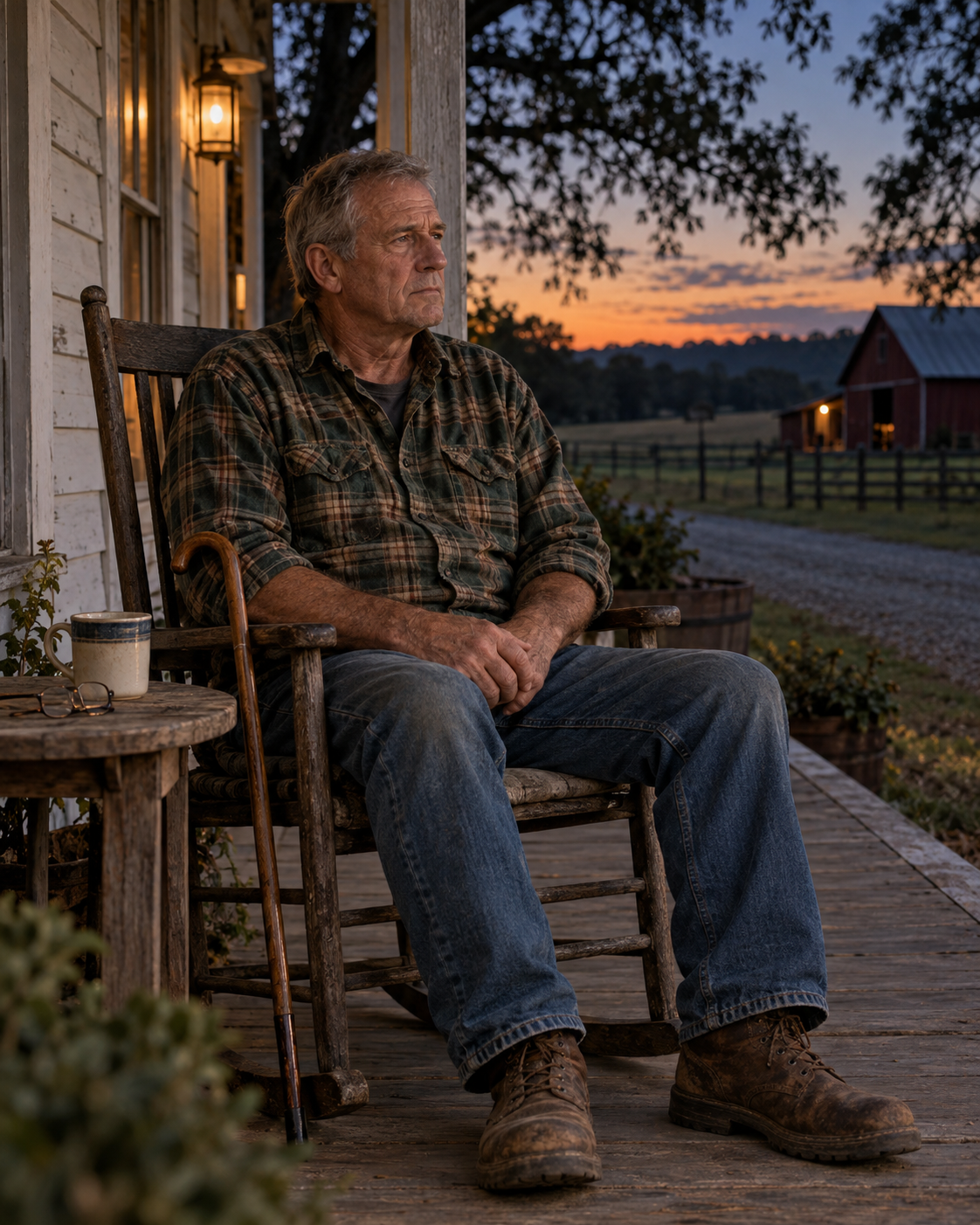
The Quiet House
Walter drove home alone.
The pecan trees cast long shadows across the driveway.
The horses were waiting near the fence.
The house was quiet.
But this time the quiet did not feel threatening.
He walked into the bedroom and saw Carol’s reading glasses on the nightstand.
He picked them up.
For a moment, he thought about putting them away.
He didn’t.
Instead, he carried them to the kitchen, set them beside the coffee maker, and stood there with both hands resting on the counter.
He had spent months believing the farm was the thing he had been fighting to protect.
Maybe it was.
His father had cleared the first field.
Carol had planted flowers along the fence.
Dean had grown up running barefoot through the same grass.
But as Walter looked through the kitchen window at the land, he realized the property had never been the whole point.
It was what the place represented.
A life built slowly.
A promise that some things could remain yours even after the people who built them were gone.
The legal case would continue.
The bank would untangle the accounts.
There would be restitution, court dates, paperwork, and people Walter had never met asking questions about his son.
Some wounds would take longer.
Walter knew that.
He also knew he might never speak to Dean again.
There are betrayals that can be forgiven.
There are others that permanently change the shape of forgiveness.
The next morning, Walter woke before sunrise.
He fed the horses.
Checked the barn.
Walked to the mailbox.
On the way back, he stopped beneath the pecan trees.
The branches reached over him, trembling lightly in the morning breeze.
He looked toward the farmhouse.
For years, he had thought strength meant holding on.
Holding on to the land.
Holding on to his marriage.
Holding on to his son.
Now he understood that sometimes strength was knowing exactly where to stop.
Walter turned toward the house and walked on.
The old boots left two clean lines in the damp gravel behind him.