The Wedding Entrance
The woman at the ballroom entrance looked at my five-year-old daughter’s pink dress, then at me.
“I’m sorry,” she said quietly. “She can’t come in.”
For a second, I thought I had heard her wrong.
Behind her, the country club ballroom was bright with afternoon light. Children ran between tables dressed in miniature suits and flowered dresses. A little boy was chasing his cousin near the cake display. Through the open doors, I could see my sister-in-law Melissa in her second wedding gown, ivory silk with a lace train and a diamond necklace I had never seen before.
I looked back at the woman.
“Why not?”
Before she answered, Melissa appeared.
She glanced at Sophie, then at me.
“This is a family wedding,” she said.
My husband Ethan frowned. “Sophie is family.”
Melissa sighed as if he were being difficult on purpose.
“You know what I mean?”
“No,” Ethan said. “I don’t.”
Melissa looked around the entrance, making sure nobody nearby was listening.
Then she said it.
“She isn’t really family.”
Sophie stood beside me holding a small pink card she had made for her aunt. She heard every word.
I didn’t raise my voice. I didn’t call Melissa cruel. There was nothing left to add.
Ethan reached for my hand.
“Then none of us are attending.”
Melissa blinked.
“What?”
“We’re leaving.”
“You can’t leave. You’re supposed to give a toast.”
“Find someone else.”
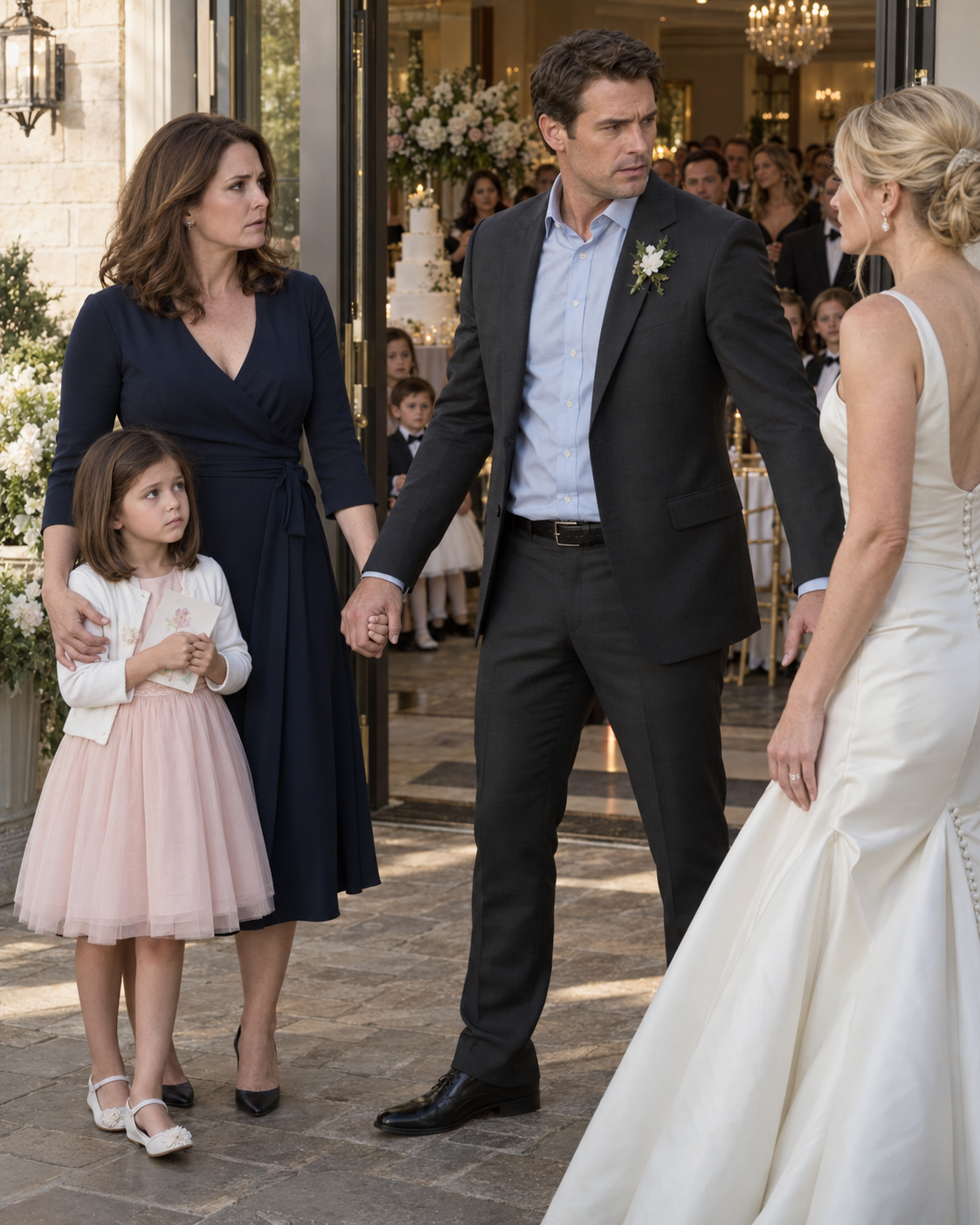
Their mother, Diane, hurried toward us.
“Ethan,” she whispered sharply, “do not ruin your sister’s wedding over this.”
He stopped.
I felt his hand tighten around mine.
“Over this?” Diane said, glancing at Sophie before quickly looking away. “You know what I mean.”
I had heard versions of that phrase for three years.
Blood is different.
You can love her, of course.
It’s not the same.
She has another family somewhere.
You never know how adopted children will feel when they get older.
But nobody had ever said those things directly to Sophie.
Not until now.
Ethan stared at his mother.
“She’s five.”
“No one is trying to hurt her.”
Diane’s voice remained low, almost soothing.
Ethan shook his head.
“You just told her she isn’t family.”
“I didn’t say that.”
“You didn’t have to.”
Melissa folded her arms.
“This is my wedding. I’m allowed to decide who comes.”
“You are.”
For a second, she looked relieved.
Then Ethan said, “And I’m allowed to decide whether my family stays.”
He took Sophie’s hand.
We walked out.
Nobody followed us.
That detail stayed with me.
Not one person came after Sophie.
They were worried about the photographs, the toast, the schedule, what the groom’s relatives might think.
Not the five-year-old girl who had just been told she didn’t belong.
The Question in the Back Seat
Outside, the September air was bright and warm.
Sophie walked between us without saying anything.
That scared me more than tears would have.
She was normally full of questions. Why were there flags along the driveway? Why did Aunt Melissa have so many flowers? Could she have cake before dinner?
Now she stared at the pavement.
We buckled her into the back seat.
I sat beside Ethan in the front.
Neither of us spoke.
We had driven maybe three miles when a small voice came from behind us.
“Daddy?”
Ethan looked at her in the rearview mirror.
“Yes, sweetheart?”
Sophie twisted one of the ribbons on her dress.
“Am I not really your family?”
Ethan immediately pulled into the parking lot of a closed bank.
He turned off the engine.
For a moment, he just sat there with both hands on the steering wheel.
Then he got out, opened Sophie’s door, and crouched beside her.
She was still wearing the fancy dress. The little card she had made for Melissa was resting on her lap.
Ethan took both of Sophie’s hands.
“Listen to me.”
She nodded.
“You are my daughter.”
Her eyes filled.
“Even if I didn’t grow in Mommy’s tummy?” she asked.
“Especially then.”
He swallowed.
“Your mommy and I chose you. And you chose us, too.”
I knelt beside them.
“You don’t have to share someone’s blood to belong to them.”
Sophie looked from me to Ethan.
“Forever?”
“Forever,” I said.
She leaned forward, and the three of us wrapped our arms around each other.
Ethan stayed there another minute, telling her about the day we first met her. He reminded her how she had refused to let go of a stuffed rabbit she carried everywhere. How she had watched us carefully before finally reaching for his finger.
Sophie smiled.
On the way home, we stopped for hamburgers and chocolate milkshakes.
She asked for extra pickles.
We let her change out of her dress as soon as we got home.
That night, after Sophie fell asleep, I sat at the kitchen counter with Ethan.
There was something I needed to tell him.
Something I should have told him months earlier.
The Sentence I Never Forgot
Three years earlier, I had overheard Diane talking to Melissa in the kitchen of their house.
I had been upstairs helping Sophie wash paint from her hands.
When we came back down, Sophie ran toward the den.
I stopped because I heard my name.
Then I heard hers.
I had never told Ethan what Diane said.
At the time, I thought staying quiet might prevent another argument.
Now I knew silence had only delayed it.
I told him everything.
Diane had said, “If they had never adopted her, at least everything would have stayed in the family.”
Ethan stared at the kitchen table.
“She said that?”
“Yes.”
He pulled out a chair and sat down.
For a long time, neither of us spoke.
“I should have told you,” I said.
“Yes,” he answered.
He didn’t sound angry.
That somehow made it harder.
We had been married twelve years.
For years, we wanted children and kept hoping it would happen. Eventually, we stopped organizing our lives around disappointment and began talking seriously about adoption.
It wasn’t a consolation prize.
It wasn’t second best.
We wanted a child.
We met Sophie when she was two.
She had enormous brown eyes and an expression that made her look suspicious of everyone.
The first afternoon, she barely spoke.
When Ethan offered her a cracker, she took it without looking at him.
Twenty minutes later, she climbed into the chair beside him.
By the end of the visit, she had wrapped her little fingers around one of his.
Ethan cried in the car afterward.
I had seen my husband cry only twice before that.
When Sophie finally came home with us, the Morgan family seemed happy.
Diane bought pajamas.
Ethan’s father built a bookshelf.
Melissa brought a stuffed elephant and posted a photograph welcoming the newest little Morgan.
Then the language changed.
Small things at first.
Real parents.
Real grandchildren.
Questions about inheritance.
Questions about what would happen if Ethan and I died.
Questions about whether Sophie would ever want to find her “real” parents.
It was never one question.
It was the pattern.
At three, Sophie understood tone.
At four, she understood exclusion.
By five, she understood words.
That was why the wedding mattered.
Melissa had taken everything they had been whispering for years and said it directly to our child.
But there was another piece.
Money.
For twelve years, Ethan had helped his family whenever they needed it.
He paid for trips.
Covered hotel rooms.
Helped his parents with repairs.
Sent money to Melissa after her divorce.
Paid family expenses nobody remembered receiving.
He never complained.
He never kept score.
Until one night, after the wedding, he opened his laptop and began reviewing our bank statements.
The payments were everywhere.
Storage fees.
Travel expenses.
Vacation accounts.
Recurring contributions.
Things that had started as temporary help and quietly become permanent obligations.
Ethan stared at the screen.
“For twelve years,” he said, “I thought helping them was something I chose.”
He closed the laptop.
“Somewhere along the way, they decided it was something they were owed.”
I sat beside him.
“What do you want to do?”
He looked toward the stairs, where Sophie was sleeping.
“What would our life look like if we stopped paying for everyone else’s expectations?”
I thought about the wedding.
About Sophie’s face.
About all the times we had said nothing just to keep things peaceful.
“I think it would be quieter,” I said.
He nodded.
“Good.”
The Boundary
We didn’t make an announcement.
We simply stopped.
Payments ended one by one.
Nothing dramatic.
No speeches.
No threats.
Ethan met with our attorney and updated our estate documents. We reviewed guardianship, beneficiaries, and the future of our company.
The lawyer asked what had changed.
Ethan looked at me.
“Our family changed.”
That was all he said.
Christmas arrived.
Sophie spent the morning in new pajamas, coloring at the kitchen table while Ethan made pancakes.
Then our phones started ringing.
Over and over.
By ten o’clock, Ethan had seventeen missed calls.
Melissa had sent message after message.
Why was the payment canceled?
Why had Asheville been canceled?
Did he seriously do this without telling anyone?
And finally:
You are punishing the entire family because you’re mad at me.
Ethan read it and handed me the phone.
“What do you think?”
I looked at him.
“She still hasn’t mentioned Sophie.”
He nodded.
That was what struck me most.
They had discovered the missing money before they discovered remorse.
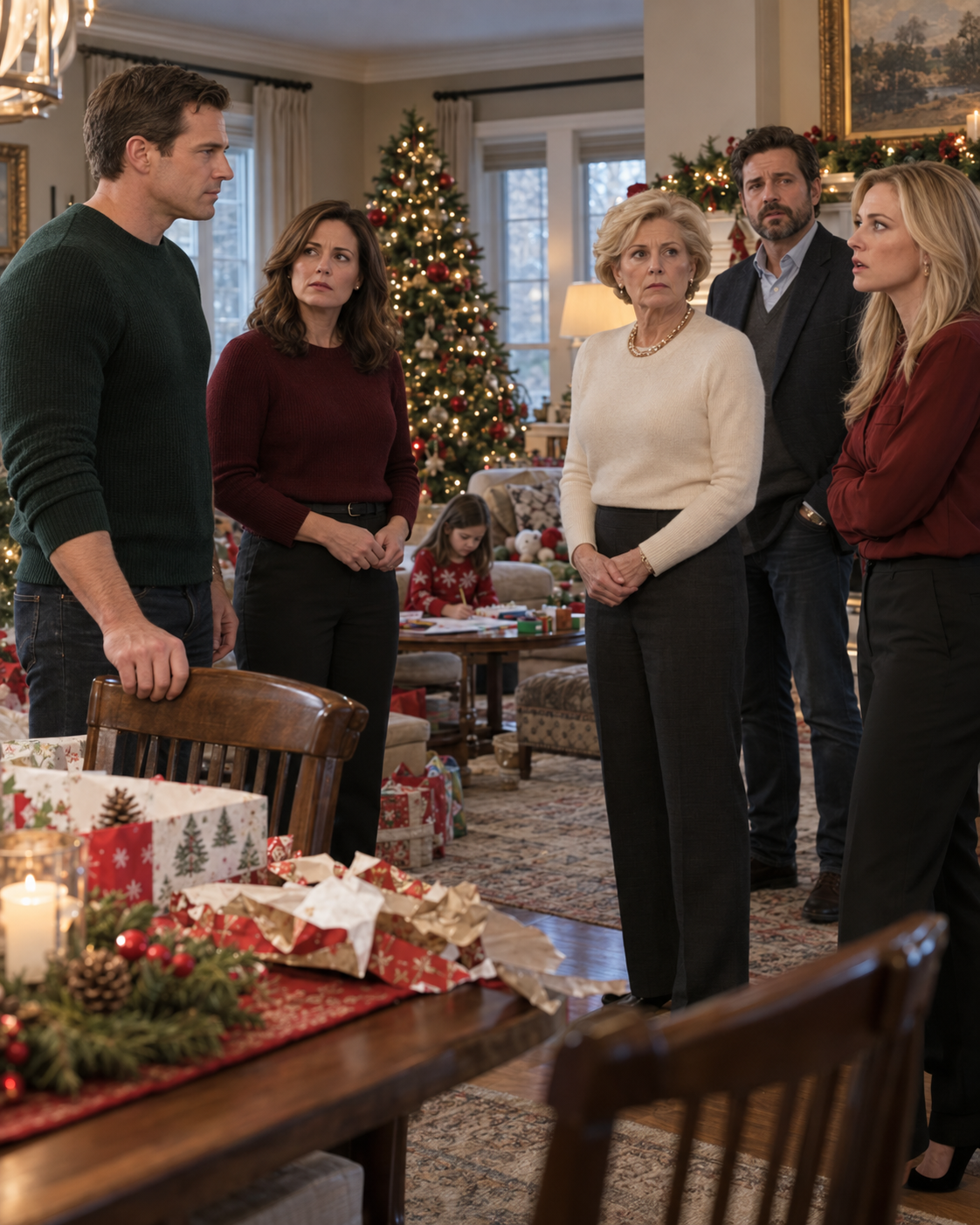
That afternoon, we went to Diane and Richard’s house.
We almost didn’t.
But Ethan wanted to make one thing clear.
This wasn’t punishment.
It was a boundary.
Sophie carried a card she had made for Richard with a crooked snowman drawn on the front.
For twenty minutes, everyone behaved.
Then Melissa cornered Ethan near the dining room.
“You canceled my storage payment.”
“Yes.”
“You didn’t even tell me.”
“It was supposed to last two months.”
“It was.”
“That was two years ago.”
Her face tightened.
“And the vacation account?”
“Stopped contributing.”
“What about Mom and Dad?”
“If they have an essential expense they genuinely need help with, they can call me.”
Melissa stared at him.
“So you’re still giving them money.”
“That’s between me and our parents.”
“But nothing for the rest of us?”
Ethan looked genuinely confused.
“For what?”
She opened her mouth, but no answer came.
Diane approached.
“Can we please not do this today?”
Ethan looked at her.
“This isn’t about today.”
“It is about the wedding,” Diane said.
“No. The wedding just made everything impossible to ignore.”
What They Thought They Were Entitled To
Melissa crossed her arms.
“You’re being vindictive.”
“I’m paying my own bills,” Ethan said. “You pay yours.”
“If that feels like revenge, maybe we had a bigger problem than I realized.”
The room went quiet.
Diane spoke next.
“Families help each other.”
“Yes,” Ethan said. “Help is voluntary.”
Nobody answered.
Then Diane looked toward the living room.
Sophie was sitting with her cousin, arranging crayons by color.
She lowered her voice.
“You and Clare have built all this. The company, the house, your investments…”
My stomach tightened.
Melissa looked away.
Diane continued.
“Are you actually planning to leave everything to her?”
There it was.
The sentence beneath every other sentence.
Ethan stared at his mother.
“So this was never really about blood, was it?”
Diane shook her head.
“That isn’t what I’m saying.”
“It sounds exactly like what you’re saying.”
“We’re talking about family assets.”
“No,” Ethan said quietly. “You’re talking about my assets.”
Diane’s face flushed.
“You know what I mean?”
This time Ethan almost smiled.
“Yes,” he said. “I do.”
Melissa stepped forward.
“Nobody is saying you can’t provide for Sophie. But leaving everything to her is different.”
“Why?” Ethan asked.
“Because she’s one child.”
“And you have children.”
“Our kids are part of this family.”
“So is Sophie.”
Melissa stared at him.
“You really don’t care what happens to the rest of us.”
Ethan looked tired now, not angry.
“I spent twelve years caring what happens to the rest of you.”
He began listing the things he had paid for.
Trips.
Repairs.
Rent after Melissa’s divorce.
Hotel rooms.
Bills.
He had never kept score.
Apparently, they had.
Then Ethan said, “Sophie didn’t take anything from you.”
Melissa’s expression hardened.
“This is all because of her.”
Ethan’s voice sharpened.
“My daughter.”
That stopped everyone.
“My daughter has never asked any of you for a dollar.”
The House They Were Counting On
Then Grant spoke.
“Can I ask something?”
Everyone turned.
He looked unsettled.
“What exactly do you mean when you say you’re not helping anymore?”
Ethan frowned.
“Family expenses.”
Grant glanced at Melissa.
“With the house?”
“What house?” Ethan asked.
Melissa went pale.
Grant continued slowly.
“She told me you were going to help with the down payment.”
Silence.
Ethan looked at his sister.
“Melissa?”
“I thought you would.”
“That’s not the same thing.”
Grant’s face tightened.
“You told me your brother always takes care of family.”
Melissa shook her head.
“I said I thought he would help.”
“You made it sound certain.”
Ethan stared at him.
“I have never agreed to finance a house for you.”
Grant swallowed.
“What about the investment?”
“What investment?”
“The development project.”
Ethan shook his head.
“I told you no.”
Grant looked at Melissa.
“You said he liked investing with family.”
“I thought he did.”
“I have never invested with family,” Ethan said.
Grant gave a bitter laugh.
“Not technically. You’ve helped her financially.”
“Helping my sister after a divorce is not investing in her husband’s business.”
The room seemed to shrink.
Questions came quickly.
How much money did Grant actually have?
How much debt was on the business?
How much capital did he need?
Why had Melissa told him Ethan was backing the project?
The answers were uncomfortable.
The luxury SUV wasn’t owned outright.
The development deal needed more capital than Grant had admitted.
And the house Melissa wanted was part of a plan that depended on Ethan’s money.
Melissa looked at her husband in disbelief.
“You said you didn’t need anyone’s money.”
“I said we had options.”
“You said the property was practically done.”
“It would have been if your brother came in.”
Ethan stared at him.
Grant corrected himself.
“I mean, if Ethan came in.”
Melissa turned toward her brother.
“You could fix this.”
Ethan looked at her.
“No.”
Her face crumpled.
“You’re my brother.”
“And Sophie is my daughter.”
He picked up our coats.
“Don’t ask my family to finance yours.”
We left.
Grant walked out separately.
Melissa never apologized.
Neither did Diane.

What Belonging Looked Like
On the drive home, Sophie fell asleep.
When we carried her inside, she woke just long enough to wrap her arms around my neck.
“Mommy?”
“I’m here.”
She looked at me sleepily.
“I’m really yours forever, right?”
I held her tighter.
“Forever.”
Ethan kissed the top of her head.
“And we’re yours.”
Months passed.
Melissa and Grant had to deal with the marriage they had built on assumptions neither had bothered to question.
Ethan never invested.
He never restored the old payments.
He still helped his parents when they genuinely needed it.
He simply stopped confusing love with obligation.
We stopped measuring family by who shared our blood, who appeared in photographs, or who expected a piece of what we had built.
Sophie grew.
She forgot parts of the wedding.
Children do that.
But she remembered the moment in the parking lot.
She remembered Ethan telling her she was his daughter.
She remembered the word forever.
One evening, almost a year later, she sat at the kitchen table drawing.
“Daddy?”
Ethan looked up from his coffee.
“What?”
“Can I put your name on my picture?”
He smiled.
“Why?”
“Because it’s our family picture.”
She drew three stick figures beneath a crooked purple tree.
Mom.
Dad.
Sophie.
Then she added a fourth figure holding a stuffed rabbit.
Ethan looked at it for a long time.
“What’s that one?” he asked.
She shrugged.
“Me when I was little.”
He laughed softly.
I watched him hang the picture on the refrigerator.
It wasn’t expensive.
It wasn’t inherited.
It wasn’t something anyone else had planned for.
It was just a child’s drawing held to the refrigerator by a little magnet.
And somehow, that was enough.