The Appointment Victoria Said Was Routine
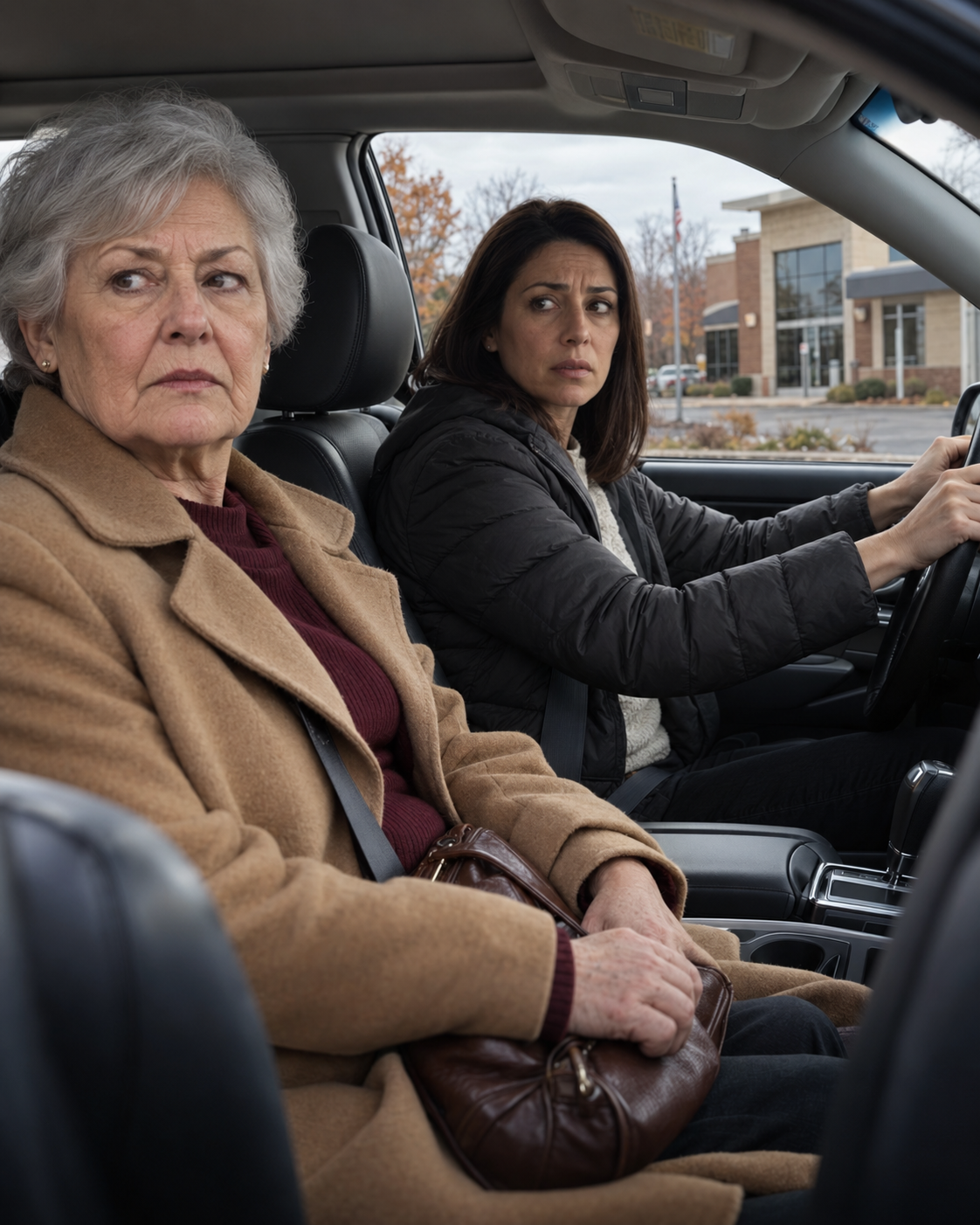
Victoria picked me up at 9:15 on a Tuesday morning and told me not to bring anything except my driver’s license.
“It’s just a security update, Mom,” she said, tapping the steering wheel at every red light. “The bank is changing some of its procedures. It takes ten minutes.”
I looked over at her from the passenger seat.
“You seem nervous.”
“I’m not nervous.”
She said it too quickly.
Outside the window, November had turned everything the color of old cardboard. The trees along Main Street were mostly bare, and the parking lots were full of people buying things they probably didn’t need before Thanksgiving.
I was seventy-one years old. I lived alone in the small brick ranch house my husband, David, and I had bought in 1989. David had been dead for three years, and since then I had become very careful about money.
Not because I was helpless.
Because I had learned how quickly life could change.
Victoria was my only child. She had always been bright, persuasive, and a little impatient. As a teenager, she could talk her way out of a detention slip. At thirty-nine, she could talk almost anyone into almost anything.
That morning, she parked beside the bank entrance and turned toward me.
“Whatever they ask, just let me handle the paperwork, okay?”
I smiled faintly.
“Why would they ask you? It’s my account.”
She frowned.
“Because I’m helping you.”
The words landed harder than they should have.
Inside, the bank smelled like coffee and carpet cleaner. Victoria checked in with the receptionist and spoke in a low voice to a branch manager named Denise Harper, whom I had met once before.
Denise smiled when she saw me.
“Mrs. Bennett. Nice to see you.”
“You too.”
Victoria stepped closer to the desk.
“Mom’s just here to update her security information. She gets confused by all the new verification stuff.”
I turned toward her.
“I do not.”
Victoria gave a small laugh.
“Mom.”
It was the same tone she had used when I couldn’t find the remote, when I forgot a restaurant reservation, when I asked her to explain something twice.
Except I hadn’t forgotten anything.
And suddenly I knew this wasn’t about a security update.
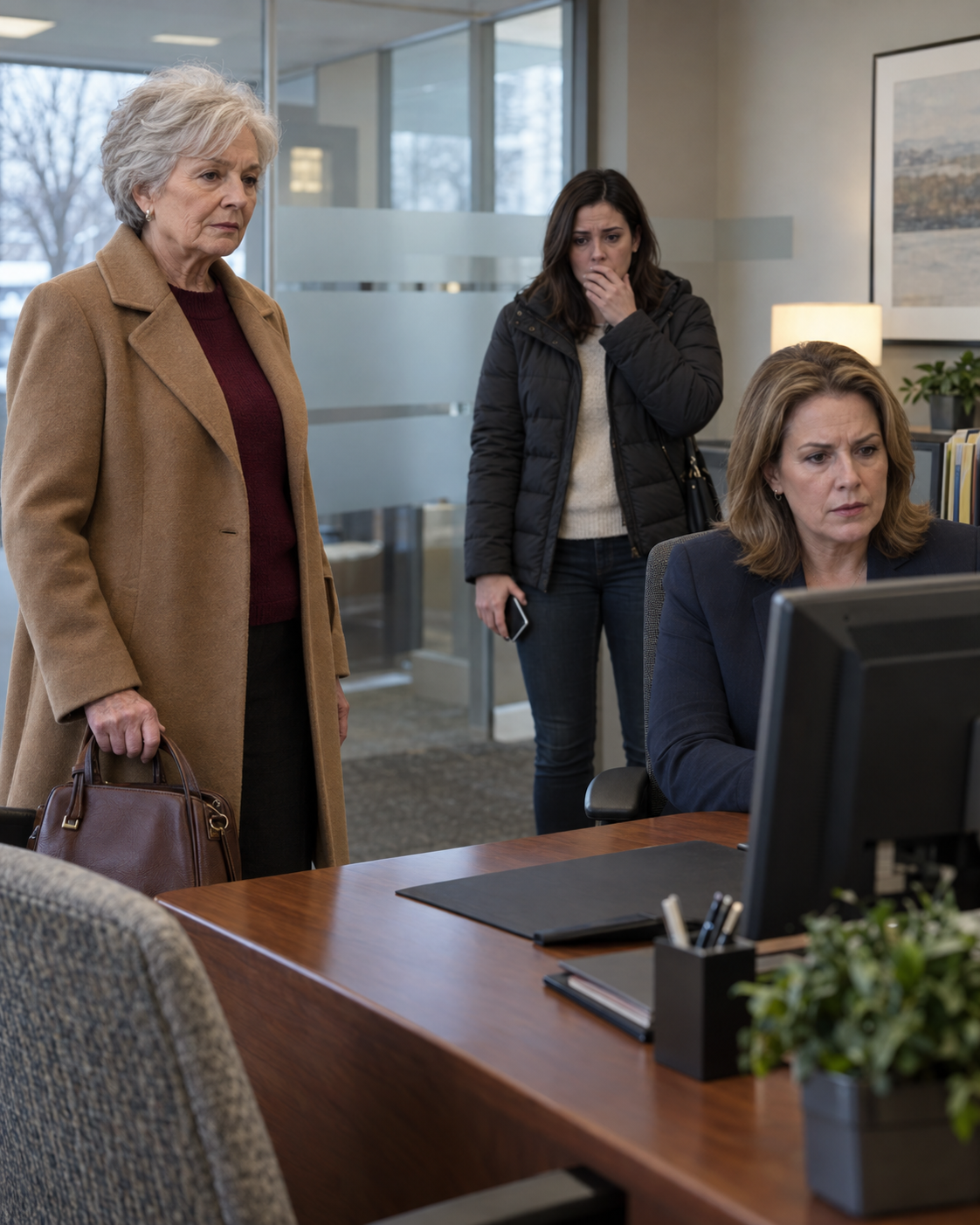
Denise led us into a small office with frosted glass walls.
Victoria sat beside me.
Denise opened the computer.
“I understand you’re here to review account security.”
“Yes,” Victoria answered.
I looked at Denise.
“Before we do that, I’d like to see the balance.”
Victoria shifted in her chair.
“Mom, that’s not necessary.”
“I’d like to see it.”
Denise entered the information.
The number appeared on the screen.
$65,214.87.
That was nearly all the money David and I had left together after selling our old rental property. My retirement savings. The money I used for property taxes, medical bills, repairs, groceries, and the quiet certainty that if something broke in the house, I could replace it without asking anyone.
Victoria leaned toward Denise.
“We actually need to make a transfer today.”
I looked at her.
“We?”
She swallowed.
“Mom, Mark has an opportunity.”
There it was.
Mark was Victoria’s husband. He had started a small real estate business two years earlier, buying distressed houses, remodeling them, and reselling them. At first, he had sounded confident and practical.
Then came the first request for a loan.
Then another.
Then the phone call at midnight because a contractor needed to be paid.
David had once told me, “A business that always needs family money isn’t a business. It’s a family obligation wearing a suit.”
I had laughed then.
I didn’t laugh now.
The Transfer I Was Never Supposed to Question
Victoria pulled a folder from her purse.
“Mark found a property,” she said. “The timing is perfect. We just need working capital for a few weeks.”
“You need sixty-five thousand dollars?”
“Not need. Borrow.”
“You already owe me twelve thousand.”
She looked at the floor.
“That wasn’t really a loan.”
The room went quiet.
Denise looked between us.
“Mrs. Bennett, nothing will happen today without your authorization.”
Victoria spoke before I could.
“She wants me to manage her finances anyway.”
I turned toward Denise.
“No, I don’t.”
Victoria’s face tightened.
“Mom, you’re seventy-one. You shouldn’t be dealing with this stuff on your own.”
I felt something inside me go perfectly still.
Not anger.
Recognition.
For the past year, Victoria had been pushing closer to my accounts. She had my online banking password “for emergencies.” She knew when my pension arrived. She had access to a credit card I barely used.
I had allowed all of it because she was my daughter.
That morning, I understood that love had made me careless.
Victoria reached across the desk.
“We’re just setting it up so I can move the money into my account temporarily. It’ll make everything easier.”
“Whose account?”
“Mine.”
“And then you give it back?”
“Yes.”
“When?”
Her mouth opened.
No answer came.
Denise’s fingers stopped moving on the keyboard.
Victoria looked at her.
“Can you explain to her? She’s getting confused.”
I sat back.
There was a small framed photograph of a sailboat on Denise’s desk. For one strange second, I thought of David.
He had hated boats. Said they were expensive holes in water.
Then I remembered something else.
A Thursday evening two years before he died, when we’d sat at our kitchen table sorting old papers.
David had been sick by then, though neither of us said the word dying out loud.
He pointed to a sealed envelope and said, “Keep this somewhere Victoria won’t think to look.”
I had laughed.
“Why would I need secret instructions from my own husband?”
“Because you trust people when you shouldn’t.”
I hadn’t opened the envelope since the funeral.
Until that moment, I had forgotten it existed.
I looked at Denise.
“Please excuse me for a minute.”
Victoria stood.
“Mom—”
“I said excuse me.”
I walked out of the office.
In the lobby, I went to the restroom, shut the door, and opened my purse.
The envelope was still there.
Three years old.
Unopened.
Inside was a card in David’s handwriting.
One line.
If anyone tries to change your account without you knowing, ask for dual authentication and use the phrase below.
Underneath was an eight-character passphrase.
I stared at it until the letters blurred.
Then I walked back into Denise’s office.
The Eight Characters David Left Me
Denise looked up.
“Everything okay?”
“No,” I said. “I think someone is trying to transfer my retirement money without my permission.”
Victoria went pale.
“That isn’t what we’re doing.”
“It is exactly what we’re doing.”
She stood so fast her chair rolled backward.
“Mom, you don’t understand what you’re saying.”
I looked at Denise.
“Please activate the secondary authentication procedure on my account.”
Denise’s expression changed.
She glanced at the screen, then at me.
“Are you sure?”
“Yes.”
Victoria stepped toward the desk.
“Denise, my mother doesn’t know what she’s doing.”
Denise held up one hand.
“Victoria, please sit down.”
The room felt smaller.
Denise entered a series of commands and then paused.
“Mrs. Bennett, there is a secondary authentication protocol attached to this account.”
I nodded.
“Use it.”
“It’s unusual.”
“My husband set it up.”
Denise asked me for the passphrase.
I gave it to her.
The computer made a quiet sound.
A red notification appeared on the screen.
Denise read it twice.
“Mrs. Bennett, there is a pending transfer for $65,000 to an external account in Victoria Bennett’s name.”
Victoria stopped breathing for a second.
“It was supposed to be temporary.”
I looked at my daughter.
“You weren’t going to tell me.”
“I was going to.”
“When?”
“After it was done.”
Denise clicked another screen.
The amount disappeared.
A second notice appeared.
“Secondary verification has canceled the transfer,” she said. “And because the transaction originated from a linked device, the fraud system has placed a temporary hold on connected accounts.”
Victoria stared at her.
“What does that mean?”
“It means we have to review the linked activity.”
Victoria’s phone began vibrating inside her purse.
Then again.
Then again.
She didn’t answer.
I did not need to ask who was calling.
Mark.
Outside the bank, Victoria followed me across the parking lot.
“Mom, please.”
I kept walking.
“You don’t understand. Mark has payroll Friday.”
I stopped.
“What does that have to do with my retirement?”
“He put money into the property already.”
“You mean your money?”
“Yes.”
“And now you need mine.”
She wiped under one eye, careful not to smear her makeup.
“We’re married. What’s ours is shared.”
I looked at her.
“You have spent years telling me I needed to be independent. Apparently you only meant emotionally.”
She flinched.
“Mom, don’t do this.”
“I didn’t do this.”
That was the first time I saw fear on her face.
Not guilt.
Fear.
And I knew that whatever happened next would change our relationship permanently.
The Locks on the Patio Door
I took a ride-share home instead of letting Victoria drive me.
At my house, I called a locksmith before I even took off my coat.
He arrived an hour later with a toolbox and a gray van.
“Lost your keys?” he asked.
“No,” I said. “I just don’t want the old ones working anymore.”
He changed both deadbolts, the back-door lock, and the lock on the small side gate.
While he worked, I went upstairs and opened the closet where Victoria had left things years ago.
A pair of boots.
Two sweaters.
A framed photograph from a beach trip.
A ceramic mug that said BREATHE.
I put everything into a cardboard box.
Not because I wanted to punish her.
Because I needed one thing in my life to have a clear boundary.
When Victoria and Mark arrived that afternoon, I was standing behind the front door.
Mark knocked first.
“Evelyn, open the door.”
I didn’t move.
Then Victoria.
“Mom, please.”
I heard Mark’s voice again.
“This is getting ridiculous.”
I looked down at the box beside my feet.
“Victoria, your things are on the patio.”
Silence.
“You’re locking me out?”
“I changed the locks.”
“This is my mother’s house.”
“It is my house.”
Mark laughed bitterly.
“You’re making a huge mistake.”
Maybe I was.
But for once, it would be my mistake to make.
They came back the next day.
And the day after that.
I didn’t open the door.
Meanwhile, I opened a new bank account at a different institution, transferred my retirement savings, and removed every old linked device and outside access I could find.
I bought a new phone and put it on an independent plan.
Then I reviewed my credit card statements.
There it was.
$450 every month.
A charge from Mark’s company.
For eighteen months.
I called the card issuer.
“I don’t recognize this recurring charge,” I said.
The representative asked whether I had authorized it.
“No.”
That single word felt surprisingly powerful.
The investigation started that afternoon.
Victoria texted me from a new number.
Mom, please. We can fix this.
Another message followed.
Mark can’t make payroll because the account is frozen.
Then:
You don’t understand what you’ve done to us.
I read the messages once.
I didn’t answer.
By Friday evening, the house was quiet.
My refrigerator hummed.
A train passed somewhere beyond the neighborhood, faint and steady.
I stood in the kitchen and realized I had spent years confusing being needed with being loved.
I wasn’t sure when I had learned the difference.
I only knew I had.
The Knock I Didn’t Answer
Three days later, someone knocked on my door after dark.
I knew it was Mark before he spoke.
“Evelyn.”
He sounded exhausted.
“We need to talk.”
I stood in the hallway with my hand on the wall.
He knocked again.
“I know you’re angry. But Victoria’s scared.”
I said nothing.
“She didn’t mean for this to happen.”
Still nothing.
“She thought you were going to help us.”
I finally spoke.
“You knew about the transfer.”
He paused.
“Yes.”
“And the charges?”
Another pause.
“Yes.”
The hallway seemed to stretch between us.
“Then you both knew.”
“We were desperate.”
I closed my eyes.
Desperate people make choices.
But they still know the difference between asking and taking.
Mark’s voice softened.
“Please open the door.”
I looked at the new deadbolt.
The locksmith had finished the job neatly. No scratches around the plate. No sign anything had changed.
And yet everything had.
“I can’t help you,” I said.
He stayed there for another few seconds.
Then his footsteps moved away.
Victoria texted that night.
Please don’t give up on me.
I stared at the words.
Once, I would have called.
Once, I would have driven across town.
Once, I would have opened my checkbook because she was my daughter and because I had been afraid that saying no meant I wasn’t a good mother.
Instead, I deleted the message.
Then I blocked the number.
In the morning, sunlight fell across the kitchen table where David and I had sorted bills, insurance papers, grocery receipts, and the strange little pieces of an ordinary life.
His old pen still sat in the drawer.
I took it out and wrote down the new account number in my own handwriting.
Then I folded the paper and put it somewhere only I knew.
For the first time in years, my money, my house, my phone, and the front door all belonged to the same person.
Me.
And when the house went quiet that evening, the silence no longer sounded like loneliness.
It sounded like mine.