The Promotion Ceremony
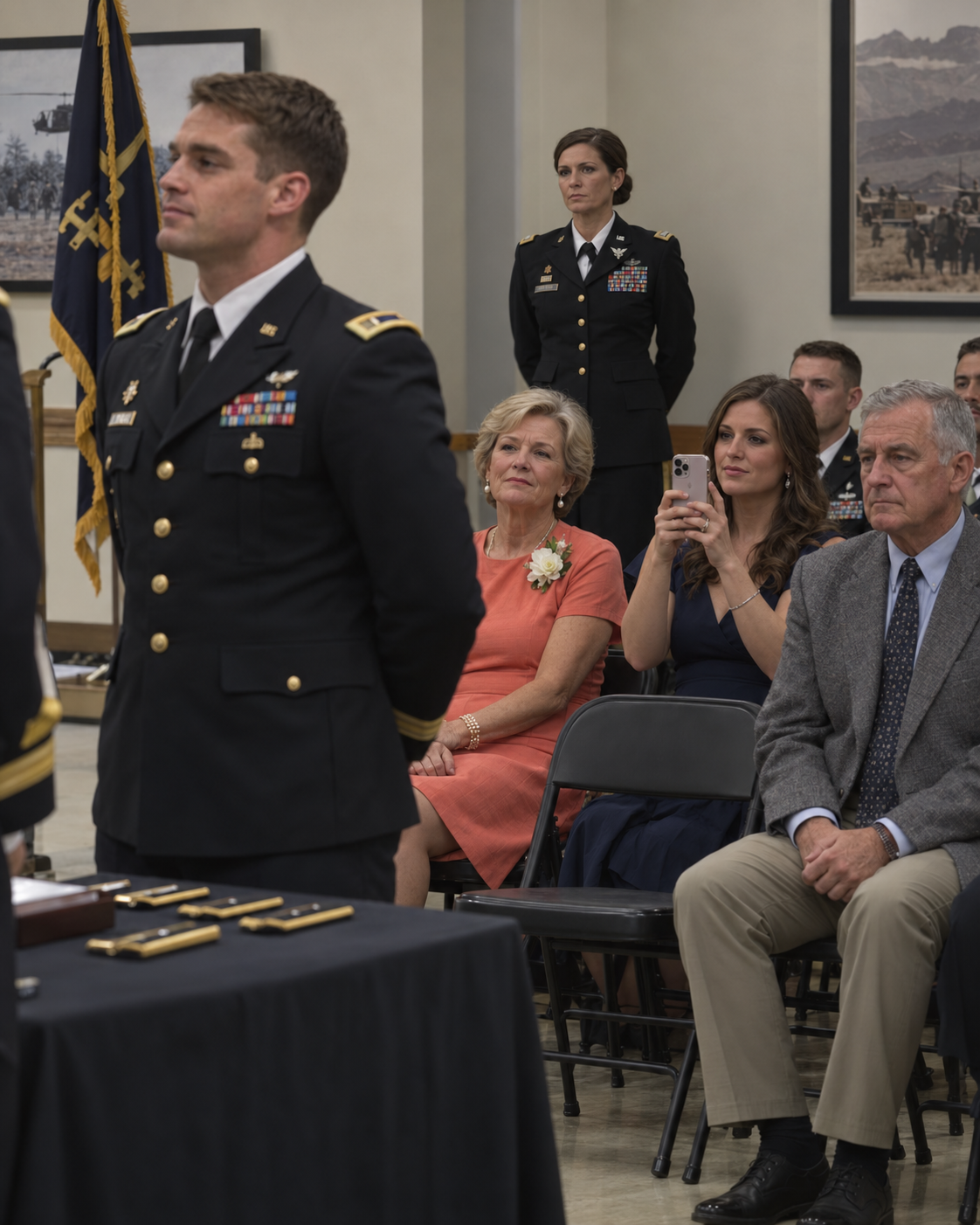
When my little brother’s captain’s bars caught the light, my mother stood beside him smiling like she’d been waiting years for that exact photograph.
There were rows of folding chairs in the battalion headquarters, a guidon near the front, and about fifty people pretending not to be nervous for the person being promoted.
I stood near the back wall in my Army service uniform.
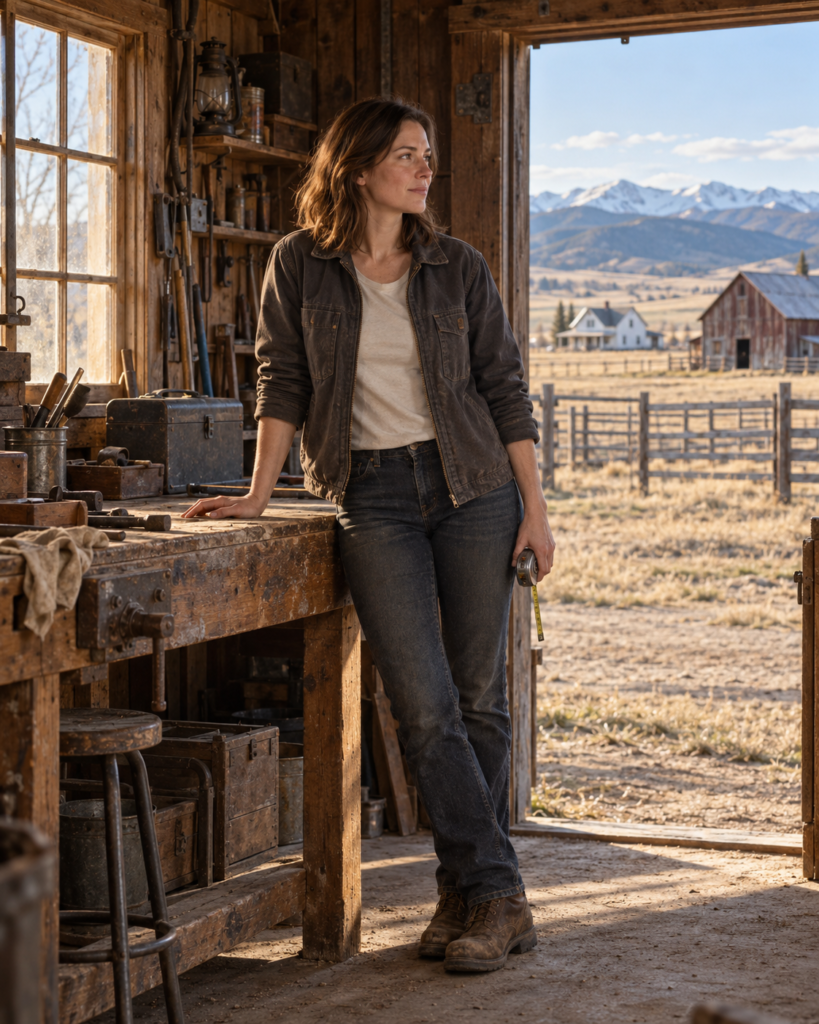
My name is Nora Bennett. I was thirty-seven years old that spring, a colonel in the Army, and I’d spent most of my adult life learning how to make important things happen without talking much about them.
My brother, Daniel, was seven years younger.
For most of his childhood, he treated me like the person who always knew what came next.
At five, he held my hand in grocery stores.
At nine, he listened when I told him whether we’d need umbrellas.
At eleven, he watched me leave for West Point with a serious expression that seemed much too old for his face.
And that morning, at Fort Liberty in North Carolina, he was about to become a captain.
My mother, Diane, had spent the morning talking to everyone.
She’d told the receptionist where we grew up, the name of Daniel’s wife, how many years he’d served, where he’d been stationed, and three different versions of how proud she was.
She was wearing a coral dress and a small corsage.
My father, Tom, sat quietly at the end of the family row.
He’d been in the Army before either of us were born. He had the posture of a man who had spent years carrying equipment and expectations at the same time.
My mother looked toward the back and waved.
“Nora, come sit up here.”
I smiled and shook my head.
“I’m good.”
I was used to standing where I couldn’t be easily noticed.
That habit had taken years to build.
I didn’t yet understand how quickly it could collapse.
The Story My Family Knew
I had joined the Army at eighteen.
Not because my father pushed me into it. He never pushed either of us toward anything.
When my West Point appointment arrived, he read the letter at the kitchen table, put one hand on my shoulder, and went back to the garage.
My mother asked whether the school paid a stipend.
That was the whole conversation.
Daniel stared at me.
“You’re really going to be a soldier?”
“Yes.”
“Like Dad?”
“Something like that.”
He thought about it.
“Cool.”
I promised I’d send him things.
I did.
What I didn’t send were all the other parts.
The promotions.
The long hours.
The deployments.
The nights when I sat in a secure room in Afghanistan trying to turn incomplete information into decisions that would affect people I’d never meet.
My first deployment ended with an Army commendation award I wasn’t allowed to discuss in detail.
I brought the medal home and put it in a drawer in my old bedroom.
My mother never saw it.
My father did.
He didn’t ask questions.
That was how we communicated back then.
By silence.
Over the next decade, I kept moving.
Captain.
Major.
Lieutenant colonel.
Battalion command.
Then colonel.
Some promotions came earlier than expected. Some assignments carried more responsibility than anyone outside the military could have guessed.
But when my mother asked about work, I usually said, “Busy.”
When she asked whether I liked a new assignment, I said, “It’s good.”
When she asked whether my job was stressful, I said, “Sometimes.”
Then we’d talk about her garden or the price of groceries or what my brother was doing.
And Daniel did not ask.
He already knew.
He’d joined the Army himself at nineteen.
He spent years enlisted before earning his commission. He went to Ranger School. He deployed. He learned the same language of silence I’d grown up with.
When we talked, we skipped the polite parts.
“What did your commander do when that happened?”
“Why’d you make that call?”
“How many people are you responsible for now?”
Those conversations were the closest thing I had to explaining myself to anyone in my family.
Still, even Daniel underestimated me.
I knew that.
I simply didn’t know by how much.
My mother thought her son was the family’s real soldier.
It wasn’t malicious.
It was just the story she’d built from the pieces I’d handed her.
The Sentence That Changed the Room
The promotion ceremony began at nine-thirty.
The battalion commander read Daniel’s orders.
Everyone stood.
Daniel stood at attention while my mother pinned the new bars onto his collar.
Her hands shook slightly.
He looked straight ahead.
When the room applauded, she stepped backward, smiling.
Then she turned toward the family.
She spread her hands a little and laughed through her tears.
“Now we have a real soldier.”
She wasn’t looking at me.
That somehow made it worse.
My father stopped clapping.
My mother still hadn’t seen me.
Then Daniel turned.
His eyes moved across the room, searching for familiar faces.
He found his wife.
Then my father.
Then me.
He saw the uniform first.
Then the rank.
Then my face.
His expression changed.
Not dramatically.
Just enough.
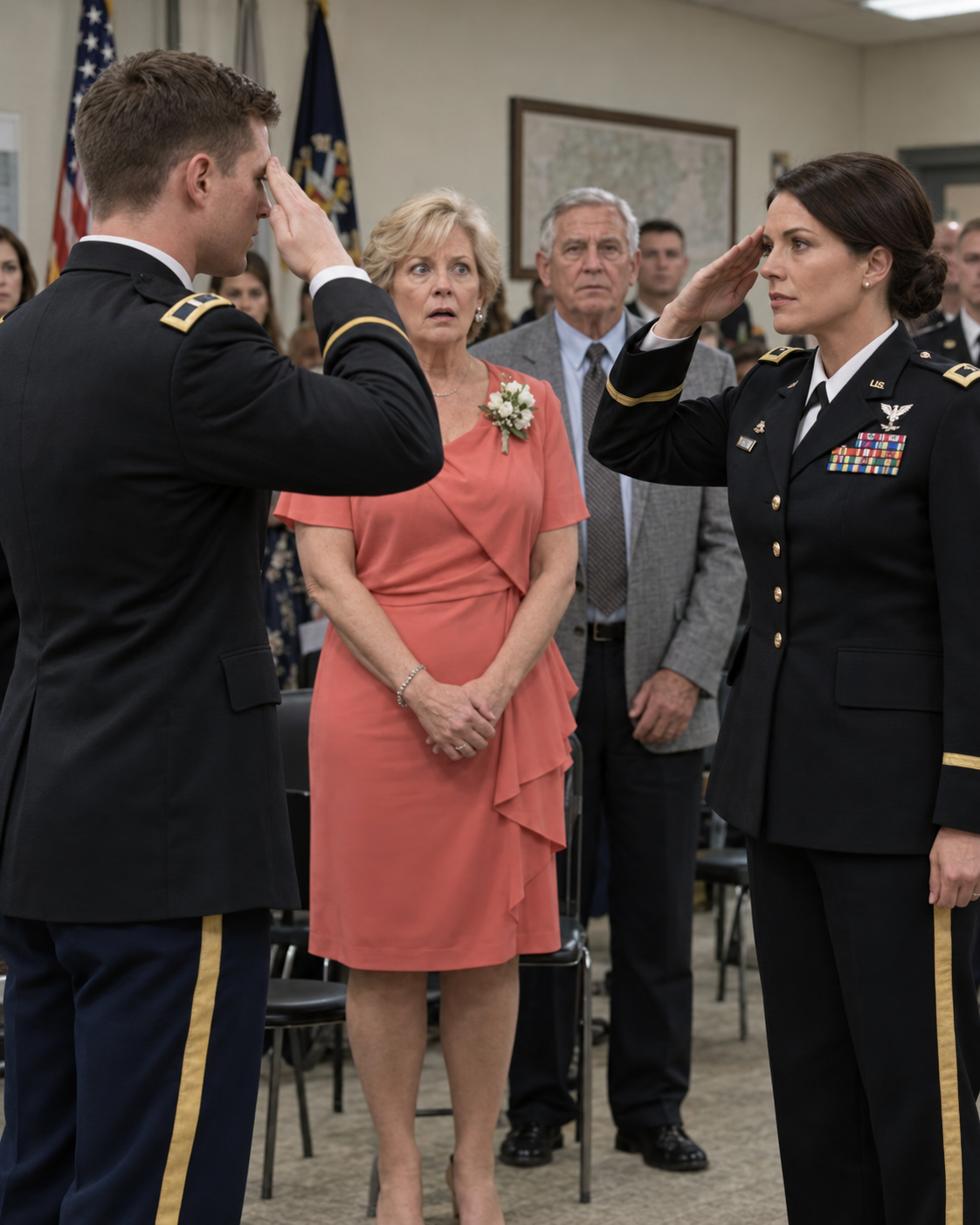
His right hand came up.
He saluted.
“Ma’am.”
The room went still.
I returned the salute.
“At ease, Captain.”
He lowered his hand.
My mother stared at me.
She looked at the silver eagle on my collar, then back at Daniel.
She counted the ribbons without realizing she was doing it.
Nobody spoke.
I felt the old instinct rise in me—the urge to make everything easier for everyone else.
Smile.
Move on.
Tell her it was no big deal.
Instead, I stayed where I was.
For once, I let the silence belong to somebody else.
What We Finally Said
Lunch was worse.
My mother had arranged a long table at a restaurant near the post. She’d already decided what everyone should order before we sat down.
For the first twenty minutes, we talked about Daniel.
His training.
His new responsibilities.
Where he might go next.
Then my mother looked at me.
“How long have you been a colonel?”
“About two years.”
She nodded.
“Two years.”
“Yes.”
She looked down at her plate.
Nobody touched their food for a while.
On the drive back to the airport, my phone rang.
It was my mother.
I almost didn’t answer.
I did.
“Hi, Mom.”
A pause.
Then she said, “Why didn’t you ever tell me?”
I was standing in the kitchen of my apartment that night, making coffee I didn’t want.
“I thought I had.”
“You didn’t.”
“I told you about the promotions.”
“You told me you got promoted.”
“That’s what a promotion means.”
Her voice caught.
“I didn’t know.”
I leaned against the counter.
“I know.”
She was quiet.
Then she said the part we’d both been avoiding.
“I thought Daniel was the one who had really done something.”
I closed my eyes.
“You said it out loud this time.”
“I know.”
Neither of us tried to soften it.
She apologized.
Not once, but carefully.
She apologized for the ceremony.
Then for the barbecue years earlier.
For calling my Army work “support.”
For asking about restaurant openings after my promotions while barely asking what those promotions meant.
I didn’t tell her she was forgiven.
I wasn’t sure yet.
Instead, I said, “You didn’t ask because I didn’t tell you. And I didn’t tell you because you didn’t ask. We both got comfortable with that.”
She breathed out slowly.
“I should have known you.”
“You did know me,” I said. “You just knew the version I showed you.”
That was the first honest conversation we’d had in years.
A week later, my father called.
He almost never called first.
“I should’ve told her,” he said.
“You didn’t have to.”
“No. But I could have.”
He told me he’d kept a folder in the garage for years.
News clippings.
Unit announcements.
Awards.
Promotions.
Anything with my name on it.
He’d been collecting them because he was proud.
He just hadn’t known what to do with that pride.
“Your mother wasn’t the only one keeping quiet,” he said.
I laughed softly.
“Apparently not.”
Then Daniel called.
“Did it hurt?”
I knew exactly what he meant.
“Some.”
He was silent for a few seconds.
“I wish I’d known.”
“I wish I’d told you.”
“You know what your problem is?”
“What?”
“You think saying you’re proud of yourself is bragging.”
I smiled.
“Maybe.”
“No, definitely.”
That made me laugh for real.
The Day They Saw Me Clearly
Several months later, I received new orders.
I would be taking command of a brigade at Fort Liberty.
It was a major assignment.
Thousands of soldiers.
A responsibility large enough that nobody could reasonably describe it as “support work.”
I emailed my parents the details.
My mother called within ten minutes.
“How many soldiers?”
“About three thousand.”
She was quiet.
Then she said, “Three thousand?”
“Give or take.”
“What does a brigade commander actually do?”
I sat back in my chair.
And for the first time, I answered fully.
I told her.
About readiness.
About training.
About deployments.
About the decisions that could affect families she’d never meet.
About the responsibility of standing in front of thousands of people and knowing that rank mattered less than what you did with it.
She listened.
Actually listened.
At the end, she said, “That’s a lot.”
“Yes.”
Another pause.
“I had no idea.”
“I know.”
This time, she didn’t apologize.
She just kept talking.
That felt better.
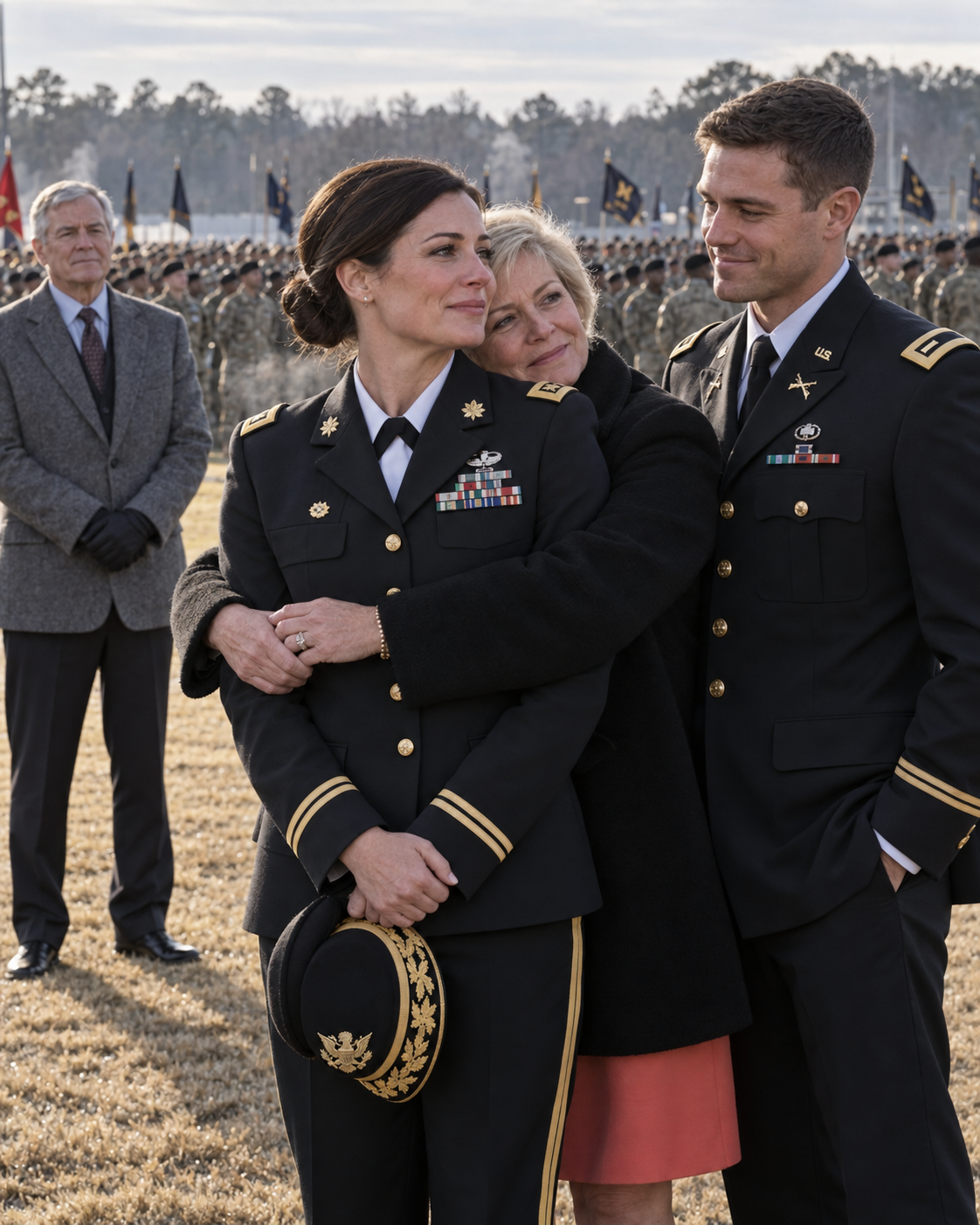
The change-of-command ceremony took place on a cold February morning.
My parents came.
Daniel came in uniform.
My mother brought flowers.
Of course she did.
The field was packed with soldiers standing in formation.
The air was cold enough that everyone could see their breath.
When the command sergeant major called the formation to attention, thousands of soldiers moved at once.
I stepped forward to receive the brigade colors.
For twenty-two years, I’d learned to be comfortable in rooms where no one outside the military would ever know what I’d done.
That morning was different.
This time, I didn’t need anyone to explain it.
I simply stood there and did the job.
When the formal ceremony ended, families moved onto the field.
Daniel approached me.
He stopped a few feet away.
Came to attention.
And saluted.
This time, I knew exactly what it meant.
Not because he’d been trained to do it.
Because he knew.
“Ma’am,” he said.
“Captain Bennett.”
He grinned.
“I still can’t believe you’re my boss.”
“You’ll survive.”
“I’ll be very professional.”
“That would be a first.”
He laughed.
Then my mother came up behind me.
She wrapped both arms around my waist.
Not the careful hug she gave at formal events.
A real one.
She held on.
I covered her hands with mine.
Across the field, my father stood watching.
Then, slowly, he raised his hand in salute.
Not because the Army required it.
Because he wanted to.
I nodded to him.
He lowered his hand.
The Things We Stop Hiding
That evening, I sat alone in my office.
There were briefing papers on the desk.
A phone charging beside them.
A framed command photograph I hadn’t bothered to unpack yet.
My father’s old letter was in my bag.
I took it out and unfolded it.
He’d written that he had always known I was capable of more than I said.
He’d just never said so either.
I smiled.
We’d all been doing versions of the same thing.
My father hid his pride.
My mother filled silence with assumptions.
My brother learned who I was by paying attention.
And I hid behind professionalism because it was easier than saying, “This matters to me.”
I used to think being overlooked was something that happened to people.
Now I understood that sometimes we participate in it.
Not intentionally.
Not cruelly.
Just little by little.
You stop correcting people.
You stop explaining.
You stop bringing the medal home from the drawer.
Eventually, everyone gets used to the smaller version of your life.
The next morning, I walked into brigade headquarters before sunrise.
A young officer at the front desk stood when I entered.
“Good morning, ma’am.”
“Good morning.”
I kept walking.
There would be names to learn, decisions to make, soldiers to protect, mistakes to correct.
The work had not changed.
But something in me had.
I no longer felt the need to disappear from my own story.
And somewhere across the post, my brother was beginning another day in uniform.
For most of my life, I’d thought the most important thing was proving that I belonged in the room.
I had been wrong.
Sometimes the harder thing is letting the people who love you see that you were there all along.