The Closing Table
The first thing I noticed at the closing was that nobody had brought a pen.
My mother had three pens in her purse. My father always carried one clipped inside his shirt pocket. Ethan, my younger brother, was the kind of person who signed receipts with whatever was closest to him.
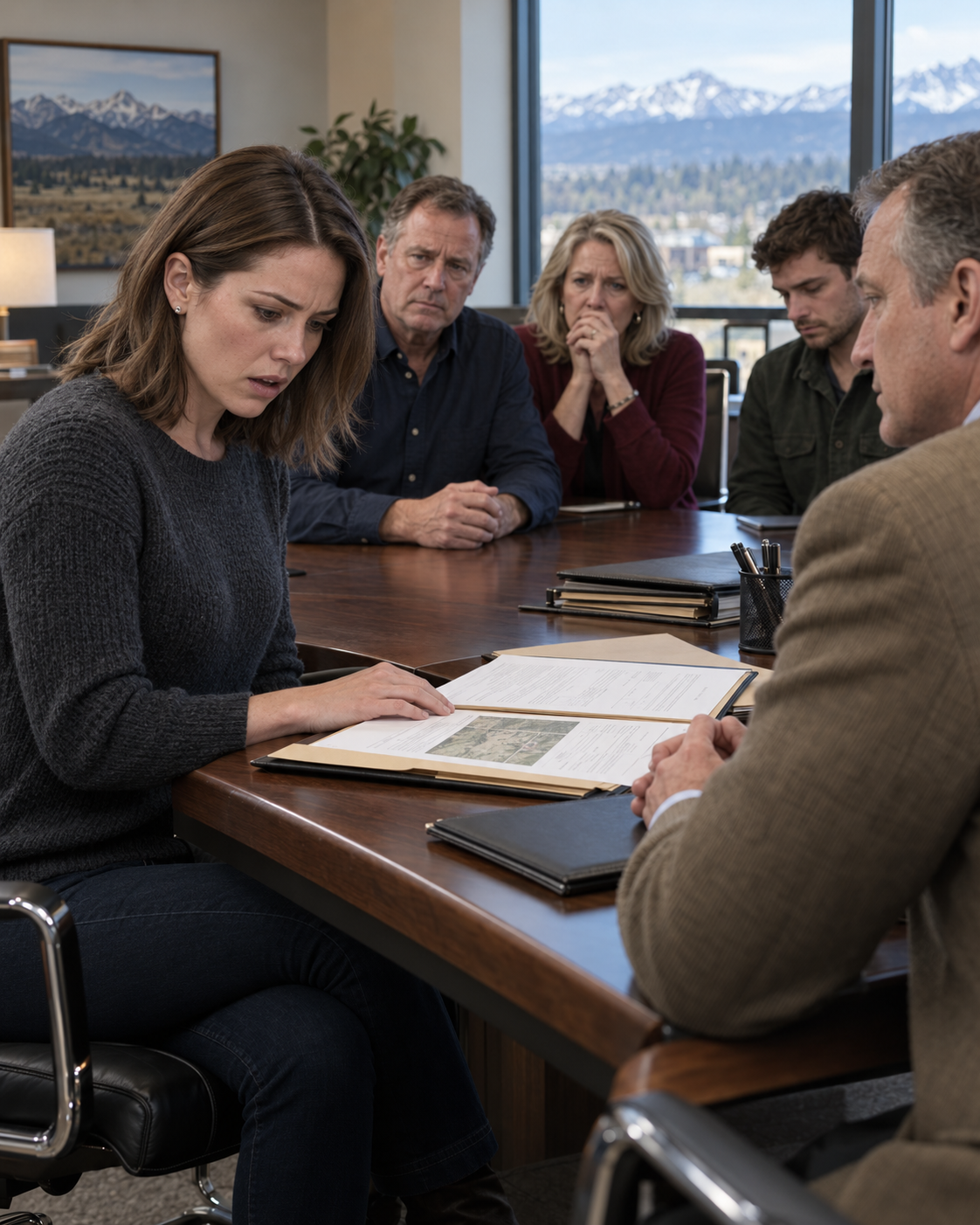
Yet when we sat around the conference table at the title company in Bozeman, everyone waited for someone else to move.
Marcus Hail, the buyer, sat across from me with a folder open in front of him. He was in his early fifties, neatly dressed, with the calm expression of someone who had already been told how a meeting was supposed to end.
My father, Robert, cleared his throat.
“It’s really just one last formality, Lena.”
I looked at the stack of documents.
“I thought I was signing an acknowledgment.”
“You are,” my mother said quickly.
She smiled at me in the particular way she had when she wanted me to stop asking questions.
I was thirty-two, an engineer living in Denver, and I hadn’t been home to Montana nearly as often since my grandfather died. The ranch had belonged to him for most of my childhood, although legally the surface property had been transferred to my parents years earlier.
Six hundred acres outside a small town. A weathered farmhouse. Two barns. A creek that disappeared into cottonwoods. My grandfather’s workshop, which smelled permanently of sawdust, motor oil, and coffee.
After his death, my parents told me they were selling it.
Six hundred twenty thousand dollars.
They said it was a fair price. The ranch needed work. Property taxes were climbing. Neither of them wanted to maintain it.
I’d accepted that.
What I hadn’t known was that my parents had already borrowed heavily against the anticipated sale proceeds. They had apparently divided the expected money between themselves and Ethan, who had been struggling to keep his restaurant in Missoula afloat.
And apparently, everyone had decided I would cooperate.
I turned another page.
Then I saw the phrase mineral estate.
I stopped.
“What’s this?”
My father leaned forward.
“Lena.”
“What is this?”
Marcus shifted in his chair.
My mother reached across the table. “Honey, don’t make this difficult.”
I pulled the document toward me.
My name appeared in the ownership section.
Not my parents’ names.
Mine.
The room seemed to become strangely quiet.
“Why do I own the mineral rights?”
Nobody answered.
I looked at my father.
Then my mother.
Then Ethan, who had been staring at his phone.
He finally looked up.
“Grandpa did that.”
My fingers tightened around the paper.
“When?”
“Four years ago,” my father said.
“Why didn’t anyone tell me?”
My mother’s expression changed first. The smile disappeared.
“Because it wasn’t important at the time.”
I stared at her.
“Four years ago, you transferred mineral rights worth—”
“Don’t start throwing numbers around,” she snapped.
Marcus finally spoke.
“Ms. Whitmore, perhaps we should take a few minutes.”
I looked at the appraisal attached to the paperwork.
$4.7 million.
I read it twice.
Then a third time.
I pushed the appraisal toward my mother.
“Why is my name on this?”
“Your grandfather wanted it that way.”
“And you knew?”
She folded her hands.
“He was getting older. He made decisions.”
My father’s jaw tightened.
“Lena, the surface is ours. The mineral rights are separate. Nobody expected you to interfere with the sale.”
I looked at Marcus.
“Did you know?”
He hesitated.
“That your grandfather retained mineral rights? Yes.”
“That he deeded them to me?”
His silence answered.
Ethan stood abruptly.
“This is insane.”
I looked at him.
“What is?”
“You’re going to blow up everything over something Grandpa gave you that you didn’t even know you had?”
“Apparently.”
“You know what this sale means to us.”
There it was.
Not an apology.
Not an explanation.
Us.
I closed the folder.
“I need to talk to an attorney.”
My mother’s face hardened.
“You’re really going to do this to your family?”
I stood.
“I haven’t done anything.”
I left the closing table without signing.
Behind me, nobody followed.
My Grandfather’s Last Letter
The attorney’s name was Elaine Marsh.
She was recommended by a colleague of mine in Denver and had the kind of office where nothing seemed decorative unless it served a purpose.
I brought her the deed, the appraisal, the sale agreement, and every email my family had sent me about the ranch.
She read quietly for almost an hour.
Finally, she looked up.
“Did you sign anything authorizing them to represent that you consented to this transaction?”
“No.”
“Did you tell the buyer you agreed to sell your mineral interest?”
“No.”
“Did you even know you owned it?”
“No.”
Elaine leaned back.
“Then don’t sign anything until we understand exactly what happened.”
Two days later, I drove to my grandfather’s old ranch.
The place looked smaller than I remembered.
Maybe that was what grief did. It didn’t just make you miss people. It changed the dimensions of rooms you thought you knew.
In the workshop, I found an old metal toolbox beneath a workbench.
Inside was a brass key, three bolts, a cracked measuring tape, and an envelope with my name on it.
My grandfather’s handwriting.
I sat down on the stool he used whenever he sharpened tools.
The letter was dated four years earlier.
He wrote that he had transferred the mineral rights to me because he wanted at least one thing on the ranch to remain outside everyone else’s plans.
He didn’t trust my parents to preserve the land.
He didn’t say he thought they were bad people.
That somehow made the words harder to read.
He wrote about the ranch’s future mineral potential, about conversations he’d had with a geologist, and about how he’d spent decades watching companies come and go.
Then there was a line I read several times.
You have always been the one who asks what something will cost before deciding whether it is worth doing.
Underneath that, he had written:
Don’t let anyone make the decision for you by making you feel guilty for asking questions.
I put the letter down.
For the first time since the closing, I cried.
Not because of the money.
Because he had known me.
The Offer Ethan Made
Ethan came to Denver the following weekend.
He didn’t call first.
I opened my apartment door and found him holding two coffees.
“Peace offering.”
“I don’t drink coffee after three.”
He looked at his watch.
“It’s two fifty.”
Despite myself, I almost laughed.
He held one out.
I didn’t take it.
His smile disappeared.
“Okay.”
He stepped inside.
For ten minutes, he talked about the restaurant.
Rising food costs. A broken walk-in cooler. A loan he had taken out during a bad expansion. A partner who had stopped contributing.
I listened.
Then he said, “If you give me half your mineral interest, I’ll pay you back.”
“How?”
“When the restaurant turns around.”
“Is it turning around?”
He looked at the floor.
“Not yet.”
I sat across from him.
“Ethan, how much do you owe?”
He didn’t answer.
“It’s bad.”
“How bad?”
“Bad enough that Mom and Dad thought the ranch sale would save me.”
There was something painfully familiar about that sentence.
They had always rescued him.
When he dropped out of college, they called it finding himself.
When he opened the restaurant, Dad invested.
When the restaurant struggled, Mom sent money.
When I worked eighty-hour weeks during my first engineering job, they called it proof that I was independent.
Ethan rubbed both hands over his face.
“I’m not asking you to give me everything.”
“No.”
“Half.”
“No.”
He stared at me.
“Grandpa would’ve wanted us to help each other.”
I thought about the letter in my desk drawer.
“Grandpa would’ve asked why you needed it.”
Ethan stood.
“Fine.”
He walked to the door, then turned.
“You’re going to regret choosing property over your family.”
I didn’t answer.
The lawsuit arrived three weeks later.
My parents claimed my grandfather had been mentally incapacitated when he transferred the mineral rights.
They alleged undue influence.
Their complaint described me as an opportunistic beneficiary who had somehow manipulated an elderly man into changing his estate plans.
Elaine read it twice.
Then she said, very calmly, “They’re going to have to prove that.”
The Emails
The case lasted months.
There were depositions, financial records, old medical files, property documents, and questions I never imagined answering about my relationship with my grandfather.
The worst part wasn’t the accusations.
It was seeing my mother’s signature on them.
Then Elaine found something.
An email chain between my mother and Marcus’s development group.
My parents had told the buyers that I supported the transaction.
They had described my involvement as “purely administrative.”
One email from Ethan said:
She’ll sign when she gets there. Mom’s handling it.
Another, sent two days before the closing, said:
Don’t bring up the mineral transfer unless necessary. Lena doesn’t know the details.
Elaine printed the messages and laid them across her conference table.
“You see the problem?”
I nodded.
“They knew.”
“They knew,” she said.
Then she handed me another document.
A statement from Frank Delaney, my grandfather’s closest friend for more than forty years.
Frank remembered the transfer.
More importantly, he had been there when my grandfather signed it.
He remembered my grandfather asking the attorney to make sure the mineral deed was recorded separately.
“He told me,” Frank testified, “that Lena was the only grandchild who would read every line.”
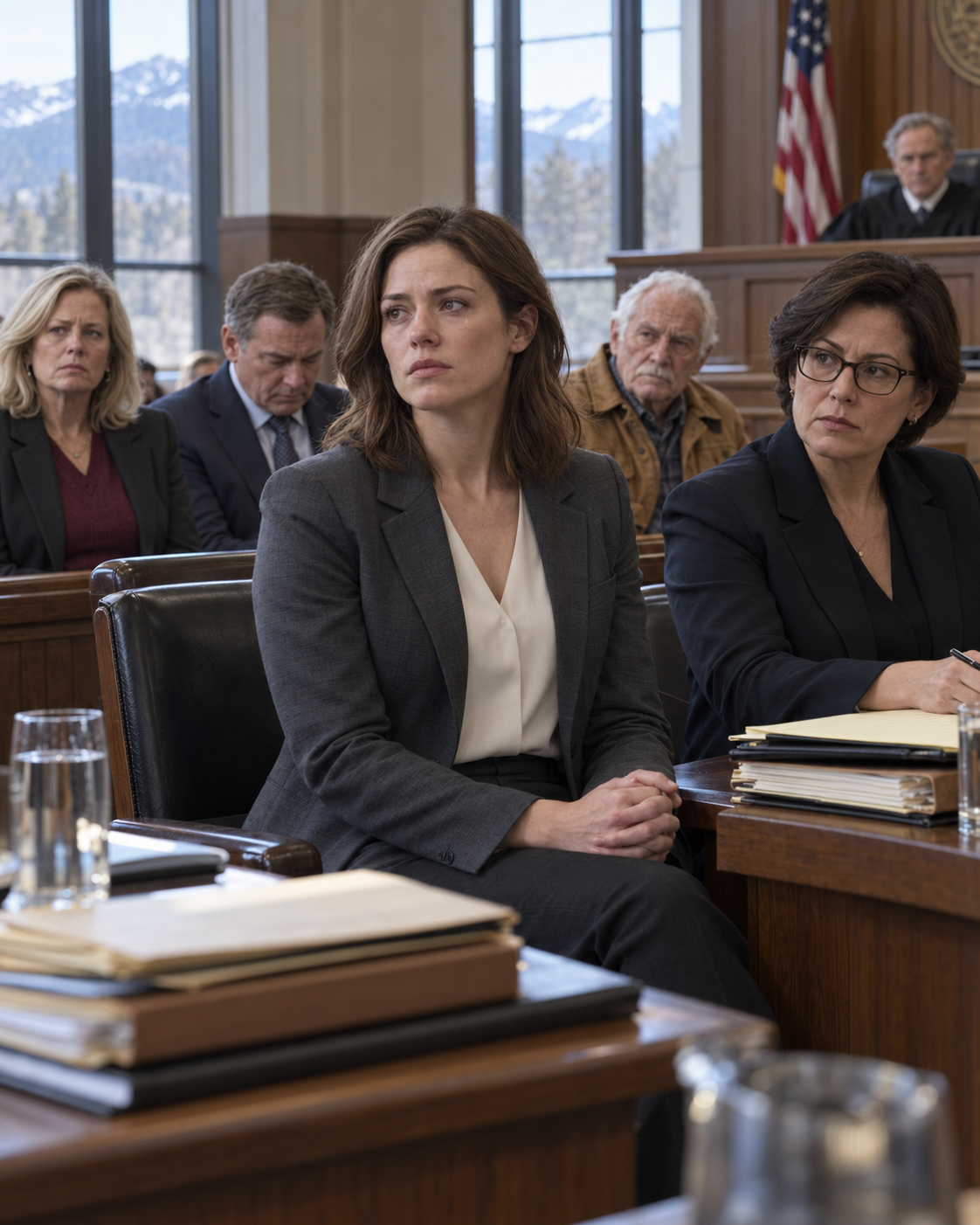
The trial was a bench trial, without a jury.
On the second day, my mother testified.
She said my grandfather had been confused near the end of his life.
Elaine asked her whether she had ever taken him to a doctor because she believed he lacked capacity.
My mother said no.
Elaine asked whether she had challenged the mineral deed when it was recorded.
“No.”
“Did you know about it for four years?”
A pause.
“Yes.”
“And during those four years, did you ever tell your daughter she owned the mineral rights?”
“No.”
“Why not?”
My mother looked toward me.
“Because I didn’t think she would understand what it meant.”
I felt something inside me go very still.
Elaine didn’t react.
She simply asked, “But you understood?”
My mother didn’t answer.
What the Judge Decided
The judge ruled six weeks later.
I was sitting beside Elaine when she read the decision.
The mineral deed was valid.
My grandfather had been mentally competent when he signed it.
There had been no undue influence.
The court also found that my parents had knowingly made false representations about my consent to the buyer.
They were ordered to pay me $68,000 in damages.
The ranch sale collapsed.
Marcus Hail withdrew rather than renegotiate around the mineral ownership, and the financing my parents had arranged against the expected proceeds became due.
They sold the house I had grown up in.
Ethan’s restaurant filed for bankruptcy that winter.
For a while, people in town acted as if I had caused all of it.
Maybe they needed a villain.
It was easier than admitting that adults had made decisions based on money they didn’t actually have and consent they didn’t actually possess.
I didn’t celebrate the judgment.
I went back to Montana.
The ranch was still there.
So was the workshop.
The roof leaked in two places. A window had cracked. The old workbench had a burn mark where my grandfather once left a soldering iron.
I spent the first Saturday cleaning it.
I replaced the window the next weekend.
By spring, I had repaired the workbench.
I didn’t move into the farmhouse.
I didn’t announce any grand plans for the property.
I hired a local land manager and kept the mineral rights exactly where they were: mine.
My mother called once.
I let it go to voicemail.
She left a message asking whether we could “put the family back together.”
I listened to it twice.
Then I called her.
We talked for eleven minutes.
There was no shouting.
No dramatic reconciliation.
I told her I wasn’t willing to discuss money with her anymore.
I told her that if she wanted a relationship with me, it had to exist separately from property, debts, favors, and guilt.
She was quiet.
Then she said, “You sound just like your grandfather.”
I looked through the workshop window at the fields beyond it.
“I’ll take that as a compliment.”
It was the closest thing to peace we’d had in years.
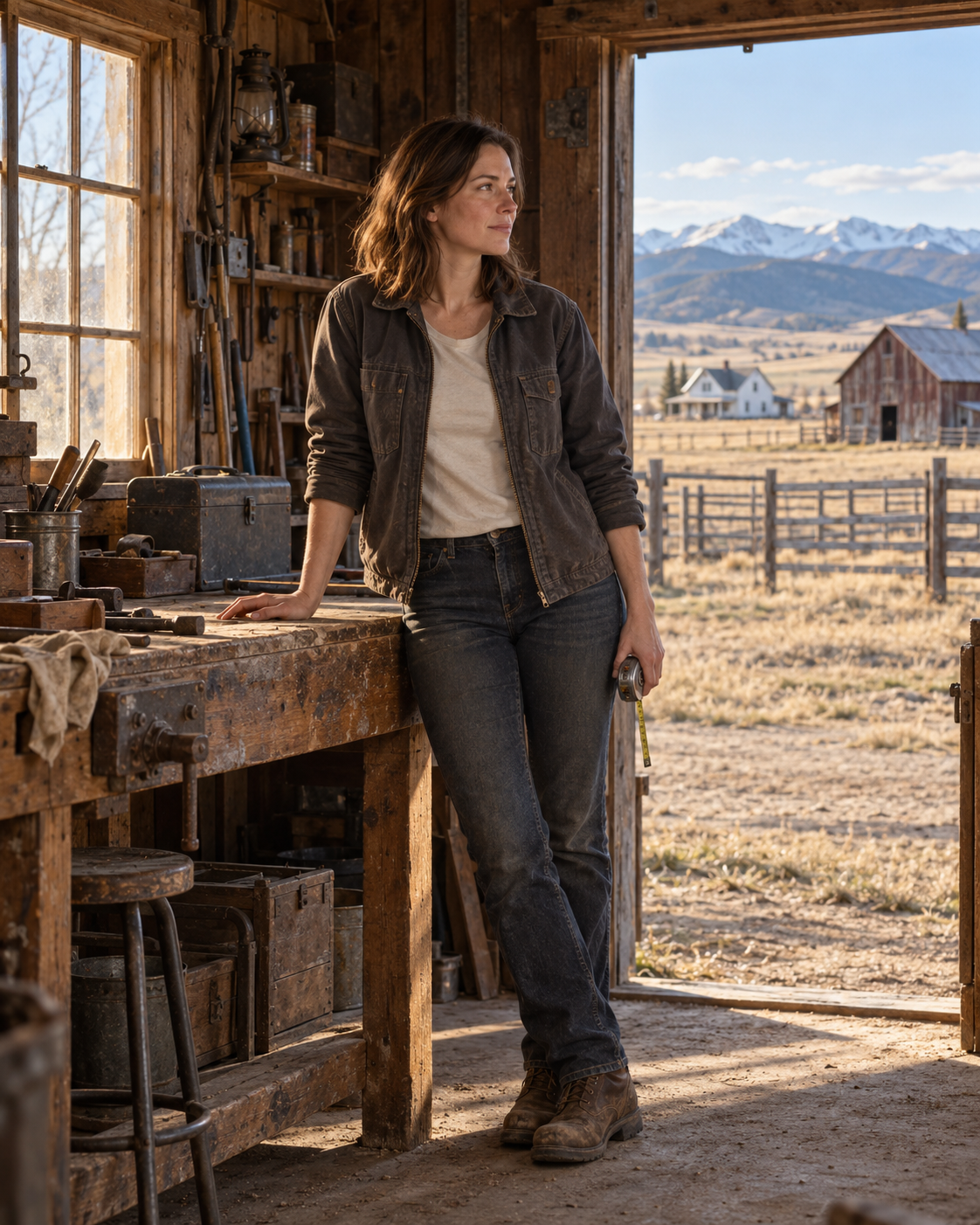
A few months later, I found myself sitting alone at my grandfather’s workbench with his letter unfolded beside me.
The paper had softened at the creases.
Outside, the wind moved through the grass in long, uneven waves.
I had spent months thinking about what he had left me.
The money.
The land beneath the land.
The lawsuit.
The house that was gone.
The restaurant that had failed.
But sitting there, I realized the most valuable thing he’d left me wasn’t something that could be appraised.
It was permission.
Permission to read the whole document.
Permission to ask one more question.
Permission to say no without turning that no into an apology.
I folded the letter and put it back in the toolbox.
Then I picked up a wrench and tightened the loose bolt on the workbench.
For the first time, the old wood didn’t feel like something I had inherited.
It felt like something I had chosen to keep.