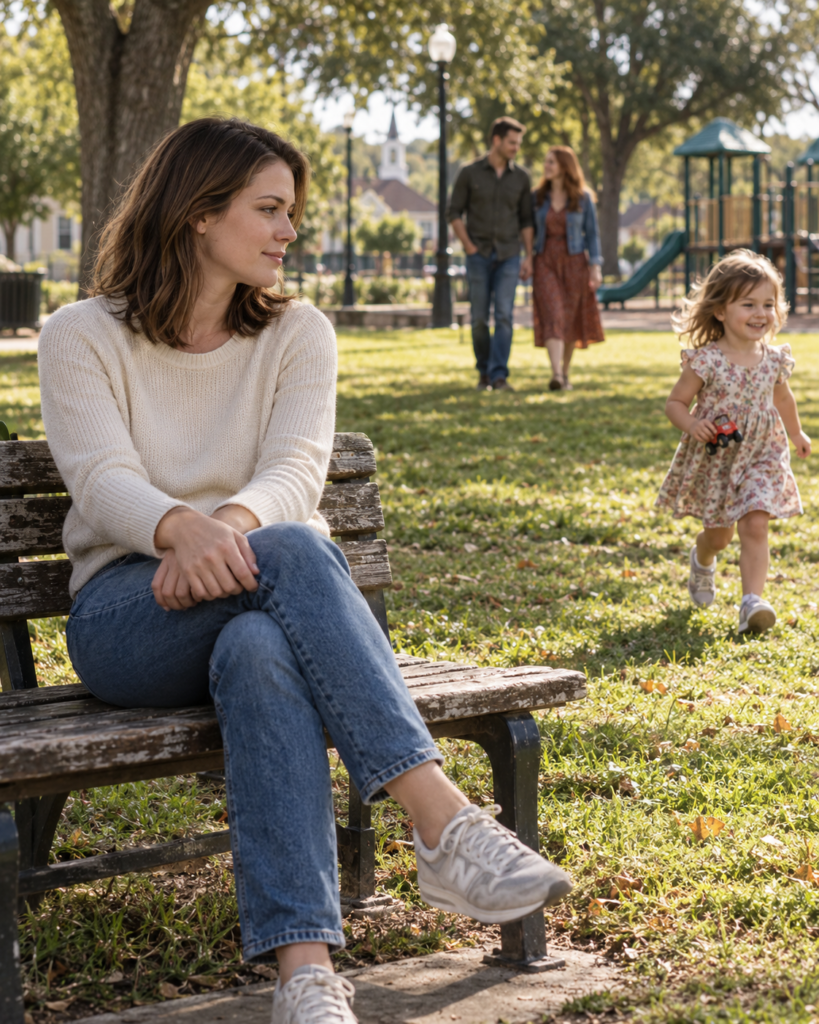
The Cup on the Kitchen Floor
The cup was still spinning when Sarah reached her mother.
It hit the kitchen tile, rolled beneath the table, and came to rest against the refrigerator. Carol stood beside the counter, one hand gripping the edge, her face suddenly pale.
“Mom?”
Carol blinked at her.
“I don’t feel right.”
By lunchtime, they were sitting in a hospital room under fluorescent lights while a doctor explained that Carol, seventy-one, had a serious illness and would need treatment, rest, and help at home.
Sarah looked at her mother in the narrow hospital bed. Carol had spent most of her life being the person who carried everything—groceries, bills, family arguments, other people’s problems. Now even lifting a cup seemed difficult.
Sarah took her hand.
“I’ll take care of you.”
Carol gave a tired smile. “You already have your own life.”
“I know.”
“You don’t have to give it up.”
Sarah squeezed her fingers. “You’re my mother.”
That was how it began.
Sarah brought clothes into Carol’s house and slowly moved her life into the spaces her mother no longer had the strength to manage. She learned the schedule for medications. She cooked soft meals. She drove Carol to appointments, washed laundry, picked up prescriptions, and figured out how to help her from the bedroom to the bathroom without making either of them feel helpless.
Her older brother, Ryan, lived about an hour away.
He called their mother often.
“Sorry I can’t make it today,” he would say. “Work is crazy.”
Carol always answered the same way.
“That’s all right, sweetheart. Take care of yourself.”
When Ryan did visit, he came carrying flowers or an expensive bag of fruit.
“My boy,” Carol would say, brightening.
Sarah never resented those visits. Not exactly.
She only wished he would stay longer.

The Life That Became Smaller
Some nights, Sarah stayed beside Carol’s bed until morning.
She learned to recognize the change in her mother’s breathing before Carol said anything. She knew when to bring water, when to adjust the pillows, when to call the doctor.
One night, at nearly three in the morning, Carol opened her eyes.
“Sarah?”
“I’m here.”
“Are you still here?”
Sarah smiled. “Of course.”
Carol studied her face.
“I don’t know what I’d do without you.”
“You don’t have to thank me.”
“But I should.”
“No.” Sarah rubbed her thumb across her mother’s hand. “You’re my mother. That’s enough.”
Carol closed her eyes.
Sarah stayed until she was asleep.
Then she went into the kitchen and looked at the bills spread across the table.
Her work hours had been cut because of all the time she needed to take off. Her savings were shrinking. Her apartment had gone mostly unused. Friends had stopped asking her to go out because she almost always said no.
Her friend Mark tried once.
“You need to rest.”
“I’ll rest later.”
“You’ve been saying that for months.”
“My mom needs me.”
Mark looked at her for a long moment.
“I know,” he said. “But you need yourself, too.”
Sarah didn’t answer.
She had stopped thinking of the two as separate things.
A few weeks later, Ryan called and promised to stay with Carol for an entire Saturday.
“You can have a day off,” he said.
Sarah nearly cried.
“Really?”
“Of course. You’re doing too much.”
For the first time in weeks, she imagined sleeping late. Maybe walking to a coffee shop. Maybe sitting with a book and hearing nothing but the clatter of dishes.
At nine the next morning, her phone rang.
“I’m sorry, sis.”
She closed her eyes.
“What happened?”
“Something came up at work.”
“You said you were coming.”
“I know. I’m really sorry. Maybe next weekend.”
Sarah stared through the kitchen doorway at her mother sleeping.
“It’s okay,” she said.
That evening, Ryan arrived carrying a large bag of fruit and flowers.
Carol’s face lit up.
“My boy.”
Ryan sat beside her and took her hand.
“How are you feeling, Mom?”
“Much better now that you’re here.”
Sarah smiled because she knew she was supposed to.
But something inside her sank.
Ryan had been in the house less than ten minutes.
He noticed the bills on the table.
“Everything okay?”
“Medical bills.”
“You’re paying all this?”
“I help when I can.”
“You shouldn’t spend all your money.”
“I know.”
He hesitated.
“How much money does Mom still have?”
Sarah looked at him.
“Why?”
“I’m just asking. Someone should probably make sure her finances are handled.”
Before Sarah could answer, Carol spoke from the living room.
“Ryan, don’t worry about money.”
He smiled.
“I just want to make sure you’re safe.”
Sarah said nothing.
That night, after he left, Carol reached for her hand.
“Your brother worries about me.”
“I know.”
“He’s always needed a little more help than you.”
Sarah tried to smile.
“He’s your son.”
“And you’re my daughter.”
Carol squeezed her hand.
“I love you both.”
Sarah nodded.
But for reasons she couldn’t explain, the words hurt.
The Folder in the Drawer
The illness worsened.
There were still good days. Carol sometimes sat in the backyard with a blanket over her knees, drinking tea and telling Sarah stories about when she was young.
There were terrible days, too.
One night, Carol struggled to breathe.
Sarah called the doctor, then the ambulance.
At the hospital, she sat alone beneath a vending machine’s blue glow and called Ryan three times.
He didn’t answer.
Hours later, her phone rang.
“What’s happening?” he asked.
“Mom is very sick.”
“I’ll come tomorrow morning.”
He didn’t.
Sarah spent another night beside Carol.
Around four-thirty, her mother woke.
“Sarah?”
“I’m here.”
“Are you tired?”
“A little.”
Carol looked frightened.
“Are you tired of me?”
Sarah’s eyes filled immediately.
“No, Mom. Never.”
Carol reached for her hand.
“I don’t know how I got so lucky to have you.”
The next morning, she asked Sarah to go home and bring a folder from the bedroom.
“The top drawer,” she whispered. “My important papers.”
Sarah found it exactly where Carol had said.
On the front, in her mother’s handwriting, were three words:
My last will.
Sarah stared at them.
She didn’t open the folder.
She put it carefully into her bag and returned to the hospital.
For three days, she carried it without looking inside.
She wanted to respect her mother’s privacy.
And maybe, if she was honest with herself, she was afraid.
On the final evening, Carol looked toward the window.
“I’m sorry,” she whispered.
“For what?”
“For making you work so hard.”
Sarah shook her head.
“You don’t have to be sorry.”
“I wish I had more time.”
“So do I.”
Carol closed her eyes, then opened them again.
“Take care of your brother.”
Sarah stared at her.
“Mom, he can take care of himself.”
Carol gave a faint smile.
“He’s still your brother.”
Sarah didn’t argue.
Just before dawn, her mother’s breathing changed.
A nurse came in. Then another.
Sarah was asked to step into the hallway.
She stood there with both hands over her mouth.
A few minutes later, the doctor approached.
“I’m sorry.”
Sarah nodded before he finished.
She knew.
When they let her back inside, Carol looked peaceful.
Sarah touched her mother’s hand.
It was cold.
“Goodbye, Mom.”
For two years, Sarah had known exactly what to do next.
Give the medicine.
Make the appointment.
Wash the sheets.
Bring the water.
Call the doctor.
Now there was nothing left to do.
What the Will Said
The funeral was three days later.
People filled the church. Neighbors came. Old friends of Carol’s came. Ryan stood near the front, crying openly and telling anyone who would listen how much their mother had meant to him.
Sarah stood beside him.
She didn’t correct anyone.
She didn’t want to explain what the last two years had looked like.
She didn’t want to turn grief into a scoreboard.
A week later, Ryan called.
“The lawyer wants us there Friday.”
Sarah knew what he meant.
“The will.”
On Friday afternoon, she sat beside Ryan in a small law office while Mr. Harris placed a folder on the desk.
Sarah recognized her mother’s handwriting.
Mr. Harris opened it.
“Your mother left her home to her son, Ryan.”
Sarah’s hands went cold.
He continued.
“Her savings and financial accounts are also left to her son, Ryan.”
She stopped hearing the rest for a moment.
The house.
The money.
Her mother’s car.
Jewelry.
Furniture.
Almost everything Carol owned.
Ryan received it.
Sarah received her mother’s photographs and personal belongings.
That was all.
She looked at Mr. Harris.
“There has to be a mistake.”
“There isn’t,” he said gently. “The will was properly signed and witnessed. Your mother made these decisions before her illness became severe.”
Sarah nodded.
She thought about the hospital corridors.
The medication bottles lined up on the kitchen counter.
The grocery receipts.
The nights she slept in a chair.
The mornings she went to work exhausted.
The job she turned down because it required travel.
She had never kept a list.
Now, against her will, she could remember every single thing.
Ryan shifted in his chair.
“Sarah…”
She raised a hand.
“Don’t.”
He fell silent.
“I can give you some money,” he said.
She looked at him.
That sentence hurt more than she expected.
“I don’t want your money.”
“That’s not what I meant.”
“I know.”
Sarah stood.
She walked out of the office and didn’t cry until she reached her car.
Then she sat behind the steering wheel with both hands in her lap and finally let herself break.
The Letter She Wasn’t Supposed to Need
Her mother’s house felt different after the funeral.
Not empty.
Worse than empty.
Familiar.
Every room contained some small reminder that nobody had bothered to move yet.
Carol’s chair by the window.
Her radio.
Her favorite mug.
A folded blanket on the sofa.
In the bedroom, Sarah opened the closet and found her mother’s blue sweater still hanging where it had always been.
She pulled it against her chest and sat on the floor.
“Mom,” she whispered.
Her voice broke.
“Was I not enough?”
The house gave her nothing back.
Only silence.
For months, Sarah went through the motions.
Work.
Home.
Dinner for one.
Sleep.
She missed being needed almost as much as she missed being loved.
Some days she was angry with Ryan.
Some days she was angry with Carol.
Most nights, she was angry with herself.
Why had she given so much?
Why had she never asked for anything?
Why had she believed sacrifice would automatically be remembered?
One Saturday morning, Ryan knocked on her apartment door.
Sarah almost didn’t let him in.
When she finally opened it, he looked exhausted.
“Can I come in?”
She stepped aside.
He sat at the kitchen table.
“I don’t like the house,” he said.
Sarah looked at him.
“You wanted the house.”
“I know.”
“Then why don’t you like it?”
Ryan rubbed his hands together.
“It feels empty.”
Sarah said nothing.
“Everything in there reminds me of Mom.”
A bitter laugh almost escaped her.
“How strange.”
Ryan lowered his head.
“I finally understand something.”
Sarah waited.
“Mom told me about you before she died.”
Her expression changed.
“What did she say?”
“She said you were the strongest person she knew.”
Sarah stared at the table.
“She said you never asked her for anything. You helped because you loved her.”
Her eyes burned.
“She thought I always needed something from her. Money. Advice. Help. A place to stay.” He swallowed. “She thought giving me the house would help me stand on my own.”
Sarah finally looked at him.
“Then why didn’t she tell me?”
Ryan shook his head.
“I don’t know.”
“She thought I would understand?”
“I think so.”
Sarah sat back.
“I understood why she needed me. I understood why you were busy. I understood why she worried about you.”
Her voice softened.
“But I didn’t understand why she could leave me feeling like I mattered less.”
Ryan wiped his face.
“I know.”
“No,” Sarah said quietly. “You don’t.”
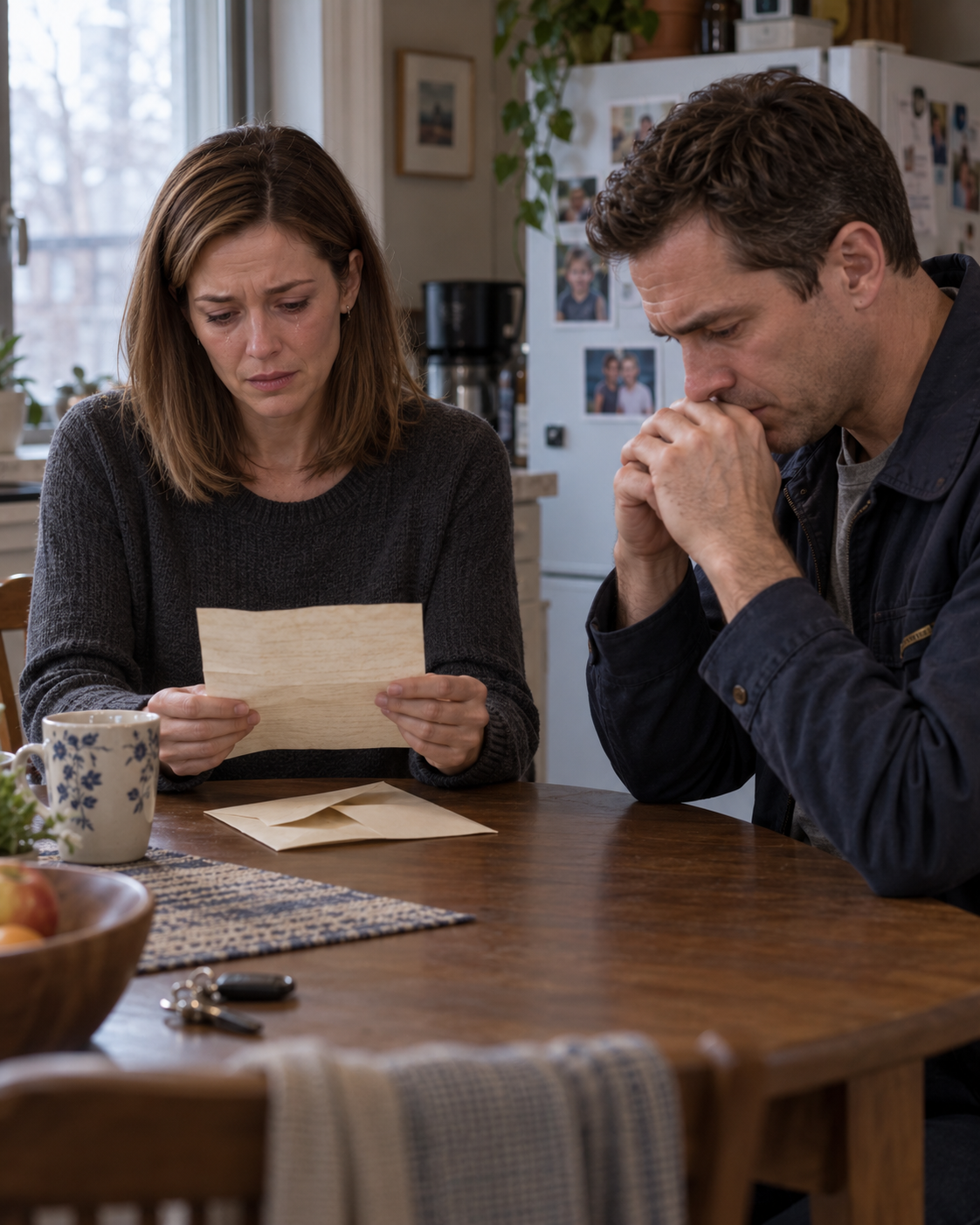
He reached into his jacket and pulled out a small envelope.
“I found this in Mom’s bedroom.”
Sarah recognized the handwriting before she saw her name.
For Sarah.
Her fingers trembled.
“She told me once she wanted to give it to you.”
Sarah opened the envelope.
Inside was a short letter.
The Thing Her Mother Finally Said
Sarah read the letter slowly.
Her mother wrote that she knew Sarah might feel she had not received enough.
She admitted she had failed to show her daughter how much she had seen.
She remembered the nights Sarah stayed.
The hospital visits.
The hand she held.
The way Sarah always came when she was called.
Then came the words that stopped her.
Carol wrote that she had given Ryan the house because she was afraid he would not be able to stand on his own.
She had believed Sarah could.
But she had made a mistake.
She had confused strength with not needing anything.
Sarah covered her mouth.
The final part was simple.
Her mother told her she had been proud of her.
That she had never been second in her heart.
That she was sorry.
Sarah couldn’t finish reading.
She pressed the letter to her chest and cried.
Ryan stayed across the table.
For once, he didn’t try to fix anything.
He didn’t offer money.
He didn’t explain.
He just stayed.
After a long silence, Sarah looked at him.
“I forgive you.”
Ryan’s face crumpled.
“I deserve that.”
“Maybe,” she said. “But I don’t want to spend the rest of my life angry.”
He nodded.
Then, awkwardly, like two people learning a language they should have known years ago, they hugged.
It wasn’t the house that brought them back together.
It wasn’t the money.
It wasn’t even the will.
It was the first time either of them had stopped protecting themselves long enough to tell the truth.
Sarah never got her mother’s house.
She never got the savings.
She still missed Carol.
But the letter stayed with her.
Months later, on an ordinary evening, Sarah sat by her apartment window with it folded neatly in her hands.
Outside, the sky was turning gold between the rooftops.
She read the last page again.
Then she placed the letter on the table.
For years, she had believed she needed her mother to leave her something large enough to prove she had mattered.
A house.
A savings account.
A sentence in a legal document.
Instead, all she had been given was a few pages in familiar handwriting.
Sarah looked around the apartment.
It was small.
It was quiet.
And for the first time, it felt like hers.
She reached for the letter one more time.
“Mom,” she whispered, “I was enough.”
This time, she believed it.