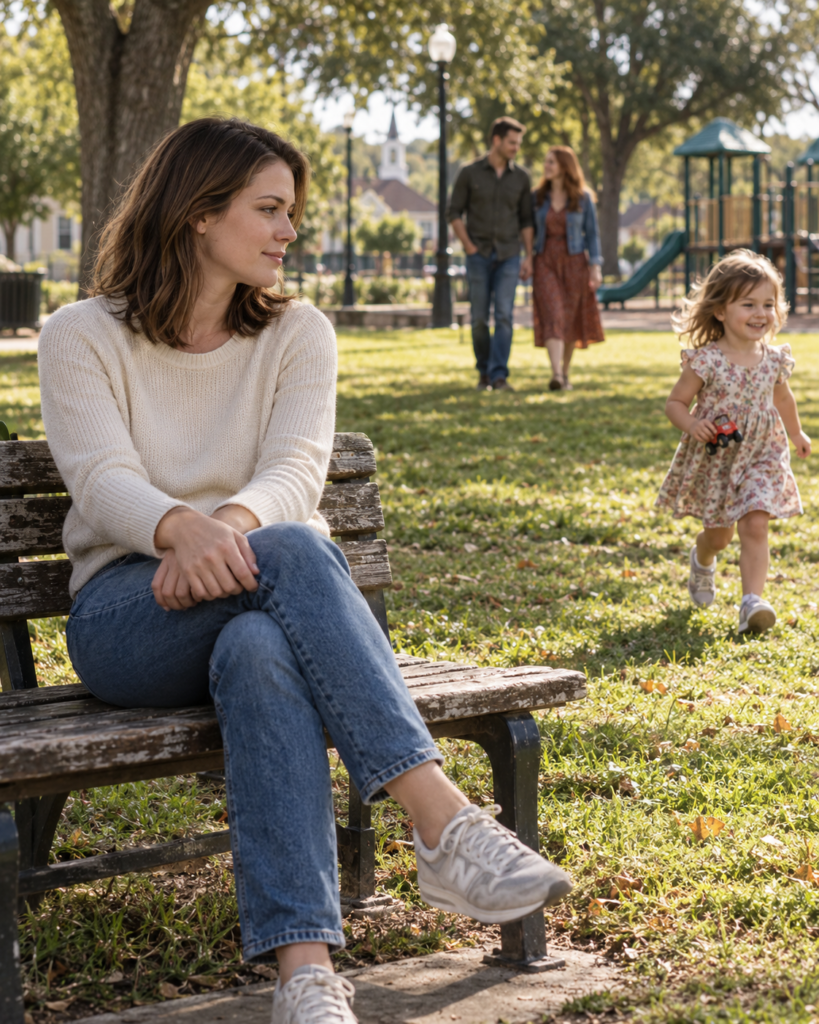
Emily Carter had forty-seven dollars in her checking account when she accepted the job everyone else had refused.
She knew the number because she had checked it three times the night before, sitting alone at her kitchen table with her phone beside a stack of unpaid bills. Her rent was due in nine days. Her car insurance had lapsed. The nursing agency had called that morning with the kind of placement recruiters described carefully, as if the wrong adjective might expose them to liability.
Six nurses had quit in four months.
The client, Jackson Callahan, was sixty-three, recovering from a serious motorcycle accident, and living alone outside Cottonwood, Arizona. He was physically stronger than most people his age and apparently determined to prove it every hour of every day.
“You understand he’s difficult?” Sandra from the agency had asked.
“How difficult?”
A pause.
“Difficult enough that six nurses walked out.”
Emily had taken the job anyway. The original material describes the same setup: six nurses had already left, while Emily arrived because she needed the money and was willing to try.
The Callahan property sat beyond a long stretch of washboard road where the desert pressed close on both sides. The house was low and broad, surrounded by gravel, a barn-sized garage, and a gate with a camera mounted above the intercom.
Emily parked, stepped out, and pressed the button.
A man’s voice came through the speaker.
“Name.”
“Emily Carter. From Pinnacle Home Care.”
Silence.
Then, “You’re the nurse?”
“Yes.”
Another pause.
“Fine.”
The gate opened.

Jackson Callahan was waiting inside.
He was six-foot-two, broad through the shoulders, with gray hair pulled back and a thick gray beard. He wore a black T-shirt and faded jeans. His left hand rested against the door frame.
Not casually.
For balance.
Emily noticed because she was a nurse.
She also noticed the way he shifted his weight before turning, the slight drag in his left foot, and the annoyance that crossed his face when he realized she had seen all three.
“You took the job,” he said.
“I did.”
“Why?”
Emily could have said she wanted experience.
She could have said rural home care interested her.
Instead, she told the truth.
“I need the money.”
Something changed in his expression.
Not kindness. Not exactly.
More like respect.
“Come in,” he said. “Don’t touch anything you don’t need to touch.”
The Man Who Hated Being Helped
Jackson tested her from the first morning.
He refused medication at the scheduled time because he preferred taking it later. Emily checked the chart, called his physician’s office, and confirmed the later schedule was medically acceptable.
She returned to the kitchen.
“You were right,” she said.
Jackson looked up from his coffee.
“I know.”
She stared at him.
He stared back.
Neither smiled.
By the third day, he had moved furniture around the house by himself. A heavy side table had been shoved against the wall. A chair had been repositioned. The lamp had been moved several feet.
Emily found him breathing hard with one hand braced against the counter.
She looked at the furniture.
Then at him.
“You changed the room.”
“I have eyes.”
“Why?”
“So I don’t have to walk as far.”
That was the answer.
The room wasn’t messy. It was engineered.
Every object he needed had been moved into easier reach because Jackson had spent his nights figuring out how to live around a weaker left side without asking anyone for help.
He wasn’t refusing assistance because he wanted to be difficult.
He was refusing it because dependence frightened him.
Once Emily understood that, she stopped trying to win arguments and started paying attention.
When he wanted water, she brought water.
When he changed his mind and wanted coffee, she brought coffee.
When he complained that it was too hot, she cooled it.
When he decided he wanted water again, she put the glass down without comment.
Finally, Jackson looked at her.
“Why aren’t you angry?”
“I am.”
He frowned.
“Then why don’t you act like it?”
“Because being angry at you doesn’t help either of us.”
He leaned back.
“You’ll leave.”
“I’ll leave at five-thirty.”
“Same thing.”
“No,” Emily said. “I’ll come back tomorrow.”
That silenced him.
Over the next two weeks, something shifted.
Not dramatically.
Jackson simply stopped looking at her like she was temporary.
One afternoon, he pointed to an old photograph tacked near the kitchen cabinet.
“That’s Marcus.”
Two young men stood beside motorcycles, laughing at the camera.
“My best friend,” Jackson said. “Twenty-two years.”
“What happened?”
“Heart attack. Forty-eight.”
Emily waited.
Jackson rubbed his thumb along the edge of the photograph.
“He beat me at arm wrestling once.”
She smiled.
“Only once?”
“Once too many.”
For the first time, Emily saw the younger man hiding inside the difficult one.
Jackson had spent decades running a motorcycle charter, building a reputation around being hard, independent, and impossible to intimidate. The people in his old photographs seemed to trust him completely.
But now most of the house was silent.
There were no friends dropping by.
No family gathering around the kitchen table.
Only Jackson, the empty rooms, and the growing sense that something had been taken from him beyond the use of his left arm.
Then Ryan Whitmore came to visit.
And Emily noticed the first crack.
The Tuesday Visits
Ryan was Jackson’s nephew and business representative.
He was forty-one, neatly dressed, polite, and almost aggressively pleasant.
He arrived every other Tuesday.
The first time Emily met him, Ryan carried a folder.
“Property documents,” he said. “Uncle Jack and I have been working through some transfers.”
Jackson’s brow tightened.
“I don’t remember that.”
Ryan smiled.
“You had a lot going on.”
He placed the folder beside Jackson’s chair.
Then he mentioned an attorney.
Jackson looked up.
“Which attorney?”
“Bill Haret.”
“Haret retired.”
Ryan didn’t blink.
“His firm reviewed everything.”
Emily watched Jackson reach for the folder.
He stopped before opening it.
Later, when Ryan had gone, Jackson sat at the kitchen table with both hands around his coffee mug.
“He keeps telling me things happened that I don’t remember.”
“How long has he been doing that?”
“A few months.”
“And when did you start feeling confused?”
Jackson thought.
“Mostly after he visits.”
Emily made a note.
She didn’t announce a theory.
She didn’t tell him his nephew was stealing from him.
She simply kept documenting.
Symptoms.
Visit dates.
Medication timing.
Changes in alertness.
Fatigue.
Memory lapses.
What improved when Ryan was absent.
What worsened when Ryan appeared.
Then she found something else.
Transfers had been made from Jackson’s primary property company into a newer LLC. The entity did not appear in the original business records Emily had seen.
She wasn’t a lawyer.
She knew that.
But she knew patterns.
When she raised the issue, Jackson looked down at the paperwork for a long time.
“I’ve made one catastrophically bad judgment in my life,” he said.
“Trusting him?”
Jackson nodded.
The room stayed quiet.
“What do we do?” he asked.
Emily answered carefully.
“We document everything. Then you get an attorney who doesn’t answer to him.”
The attorney was Gerald Voss, a retired lawyer who had handled Jackson’s business for years.
Gerald read the records.
Then he asked one question.
“Does Ryan bring him anything to drink?”
Emily looked at Jackson.
“Coffee,” Jackson said.
“Every Tuesday.”
Gerald leaned back.
“Then next Tuesday, don’t let him drink it.”
What the Coffee Changed
The following Tuesday, Emily arrived before sunrise.
Jackson was already awake.
“I don’t want him to know we suspect anything,” she said.
“He won’t.”
Ryan arrived at 8:17.
He brought two coffee cups.
Jackson refused one.
“I already had coffee.”
Ryan smiled.
“Then save it for later.”
He left the cup on the table.
Emily didn’t touch it.
Ryan spent forty minutes discussing property documents, then mentioned Emily’s nursing contract.
“Your agency reviews her placement next month, right?”
The threat was wrapped inside a compliment.
Emily understood it immediately.
After he left, she called Gerald.
The cup was documented.
The time was recorded.
The chain of custody was preserved.
A medical sample was obtained through an independent physician, away from Ryan’s access.
And then everyone waited.
Nine days later, Gerald called.
“It’s there.”
Emily sat down.
“What?”
“A sedative compound. Consistent with repeated exposure.”
The blood work did not prove everything by itself.
But alongside Emily’s daily notes, Jackson’s symptom pattern, the timing of the Tuesday visits, and the suspicious financial transfers, it created something far more powerful.
A story.
Not the story Ryan had been telling.
The real one.
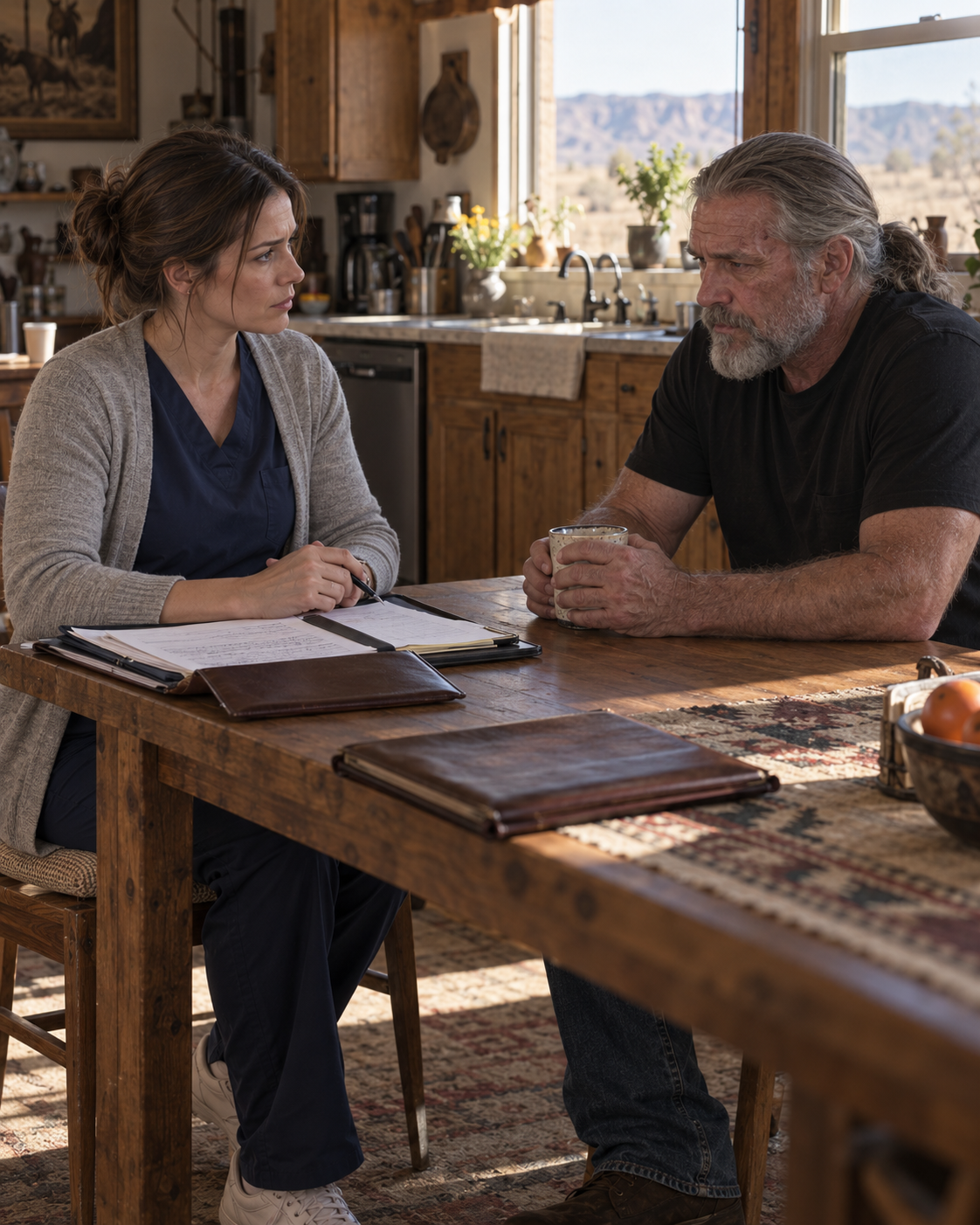
Jackson listened without interrupting.
When Emily finished, he looked at his hands.
“He wanted me to think I was losing my mind.”
“Yes.”
“And the property?”
“Gerald believes the financial transfers were part of the same plan.”
Jackson nodded once.
Then he reached for his phone.
Emily knew what came next was complicated.
Jackson knew people from his past.
Old friends.
Old loyalties.
People who understood his world in ways Emily never would.
But Gerald had been very clear.
Everything needed to happen through the law.
Evidence first.
Confrontation never.
They assembled records.
The original company documents.
The newer LLC filings.
Medical documentation.
The independent toxicology results.
Statements from people connected to an earlier case involving Ryan and an elderly relative.
The pattern was too specific to ignore.
Ryan had done something similar before.
This time, however, there were witnesses.
And there was Emily.
She had written everything down.
Not what she believed.
What she observed.
That distinction became the backbone of the case.
Then Ryan struck back.
A complaint was filed against Emily’s nursing license.
The allegation was polished.
She had become emotionally attached to a vulnerable patient.
She had crossed professional boundaries.
She had influenced Jackson against his family.
The most frightening part was how believable parts of it sounded.
The filing even mentioned her financial hardship.
It mentioned the unusual early-morning visits.
It mentioned Jackson’s promise to increase her compensation.
Everything was technically true.
The meaning had simply been twisted.
Emily sat at Gerald’s conference table, reading the document twice.
“That’s a good lie,” she said.
Gerald closed the folder.
“It’s a very practiced one.”
Sandra from the nursing agency called that evening.
“We’re not removing you.”
Emily closed her eyes.
“Thank you.”
“Don’t thank me yet,” Sandra said. “Just keep documenting.”
The Day Jackson Got His Voice Back
The hearing took place on a Thursday morning.
Jackson wore a dark jacket.
His beard had been trimmed.
His left hand moved with noticeably more strength than it had six weeks earlier.
Emily drove them to the courthouse in the same compact sedan that had carried her down that dusty road every morning.
Neither spoke much.
Inside, Ryan sat with his attorney.
He looked calm.
Confident.
Almost bored.
Until he saw the people in the gallery.
Old friends of Jackson.
People who had known him for decades.
No threats were made.
No one raised their voice.
They simply sat down.
That was enough.
The judge reviewed the evidence.
Gerald presented the financial records.
The medical evidence followed.
Emily testified about Jackson’s condition over the six-week period.
She described the changes without exaggeration.
The confusion after certain visits.
The improvement afterward.
The altered medication responses.
The repeated coffee deliveries.
The notes.
The dates.
The observations.
Ryan’s attorney challenged her.
“You’re not a neurologist, correct?”
“No.”
“You’re not a financial investigator.”
“Correct.”
“You’re a nurse.”
“Yes.”
“And yet you formed opinions about my client’s cognitive condition.”
Emily looked toward the judge.
“I documented clinical observations. I didn’t diagnose him outside my scope.”
The room became very quiet.
The judge asked Ryan’s attorney to continue.
He did.
But the case had already shifted.
The toxicology results were supported by independent chain-of-custody records.
The property filings existed.
The suspicious LLC existed.
The earlier family case existed.
The pattern was no longer an accusation.
It was evidence.
When the judge finally spoke, her voice was calm.
“These transfers are not supported by credible evidence of informed consent.”
She voided the disputed property transfers.
She ordered the LLC dissolved.
She referred the matter for criminal investigation.
Then she turned to the nursing-board complaint.
“Miss Carter’s documentation reflects the standard of care I would expect in circumstances involving a vulnerable patient.”
Emily stared at the floor.
She could feel her throat tightening.
The judge continued.
“The complaint against her is without merit based on the evidence presented here.”
Emily nodded once.
She did not cry.
Not in the courtroom.
Across the room, Jackson looked at her.
For once, he didn’t look guarded.
He didn’t look suspicious.
He looked grateful.
Afterward, Ryan walked out beside his attorney without speaking.
Jackson remained in the courthouse hallway.
One of his old friends approached and put a hand on his shoulder.
No speech.
No celebration.
Just a long, steady squeeze.
Emily stood beside them.
“You did good,” the man told her.
“I documented what I saw.”
He smiled.
“So did he.”
Jackson glanced at Emily.
For a moment, neither spoke.
Then he said, “We did.”
That was the first time Emily realized the word had changed.
It wasn’t you anymore.
It was we.

Five weeks later, Emily drove back to the Callahan property on a Saturday morning.
She wasn’t working that day.
At least, not officially.
Jackson had called the night before.
“Come early,” he’d said.
That was all.
She found him in the garage.
The tarp was gone from the motorcycle.
Emily stopped in the doorway.
Jackson rested his left hand on the handlebar.
Not gripping it.
Resting it.
“I started it Thursday,” he said.
“The bike?”
He nodded.
“How did it feel?”
He looked at the motorcycle for a moment.
“Like coming back.”
Emily smiled.
He glanced at her.
“I’ve been thinking.”
“That sounds dangerous.”
A quiet laugh escaped him.
The old laugh.
The one from the photographs.
The one she’d heard only twice in six weeks.
Jackson looked at the road beyond the garage.
“I spent thirty years making people afraid of me,” he said. “I thought that was how you kept yourself safe.”
Emily waited.
“It kept people from getting close.”
He looked down at his hand on the handlebar.
“And I almost let that protectiveness become another kind of weakness.”
Emily said nothing.
Jackson turned to her.
“I was so afraid of needing anyone that I almost couldn’t recognize when someone was helping me.”
The desert wind moved through the open garage.
Emily adjusted the strap on her nursing bag.
“You’re still going to argue with me about your exercises.”
“Absolutely.”
“And your medication schedule.”
“Obviously.”
She laughed.
He did too.
The motorcycle engine clicked softly as it cooled.
For years, Jackson had measured strength by how much he could carry alone.
Now, standing beside the machine he had thought he’d lost for good, he understood something different.
His left hand was getting stronger.
The house was no longer silent.
And the road outside was waiting.